Modern Indian Art Groups: Dates, Founders & Key Artists
Modern Indian art • chronology and membership decoded
Who formed which group? Learn the dates, places and people, then connect them with original artworks.
The key formation sequence for these five modern Indian art collectives and communities is Calcutta Group, 1943 → Bombay Progressive Artists’ Group, 1947 → Delhi Shilpi Chakra, 1949 → Group 1890, 1962 → Cholamandal Artists’ Village, 1966. Group 1890 exhibited in 1963; the number 1890 is a house number. Cholamandal is an artists’ residential community, not a group whose members all painted in one style.
This illustrated guide is designed for UGC NET Visual Arts revision and careful note-making. Each section separates formation, exhibition history, founders, later associations and individual artistic practice. Read it alongside our Indian Painting Schools comparison and Indian Art History Timeline.
1. Modern Indian art groups at a glance
| Formation | Name and place | People to anchor | Main distinction |
|---|---|---|---|
| 1943 | Calcutta Group; Calcutta, now Kolkata | Prodosh Das Gupta, Kamala Das Gupta, Nirode Mazumdar, Gopal Ghose, Paritosh Sen, Subho Tagore; early circle also includes Rathin Maitra and Prankrishna Pal | An early modernist collective, shaped by the crisis of the 1940s. |
| 1947 | Progressive Artists’ Group; Bombay, now Mumbai | F. N. Souza, S. H. Raza, M. F. Husain, K. H. Ara, H. A. Gade, S. K. Bakre | Six founders; the wider Progressive circle was larger. |
| 1949 | Delhi Shilpi Chakra; New Delhi | B. C. Sanyal, P. N. Mago, Kanwal Krishna, K. S. Kulkarni, Dhanraj Bhagat | A platform for exhibition, exchange and public engagement. |
| 1962 | Group 1890; Bhavnagar, Gujarat | J. Swaminathan, Jeram Patel and ten other artists | Formation in 1962; first and only original group exhibition in 1963. |
| 1966 | Cholamandal Artists’ Village; Injambakkam, near Madras, now Chennai | K. C. S. Paniker and fellow artists; S. G. Vasudev is a founder-member | A residential, artist-run cooperative community. |
2. Group, movement, school and community: what is the difference?
| Term | Meaning in these notes | Example or caution |
|---|---|---|
| Group / collective | Artists organise around discussion, exhibitions, shared concerns or a manifesto. | Bombay PAG and Group 1890; members can have different visual languages. |
| Movement | A broader historical or aesthetic development, sometimes spanning institutions and generations. | The Madras Art Movement extends beyond a single residential village. |
| School | A label for related training, geography or style; its meaning depends on context. | The Bengal School is not the same formation as the Calcutta Group. |
| Community / cooperative | A practical organisation of living, working, resources and livelihood. | Cholamandal combines studios and community infrastructure with artistic practice. |
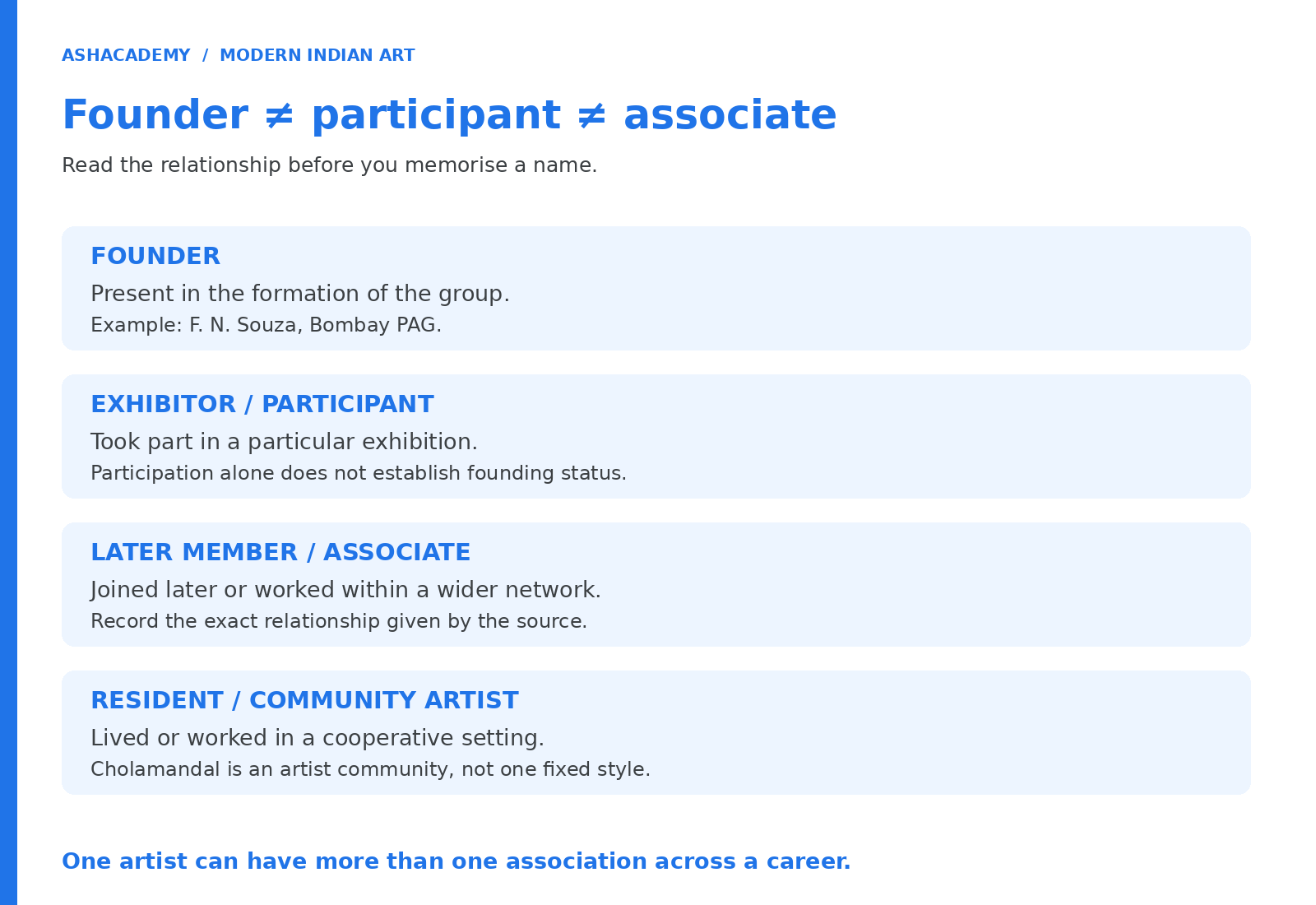
For an identification question, first ask what the name identifies. Is it a membership organisation, an institution, a location or a stylistic category? An artist can exhibit with a collective, teach at an institution and later live in a community. These relationships can coexist.
3. Calcutta Group: formation, artists and aims
| Formation year | Place | Historical context |
|---|---|---|
| 1943 | Calcutta, now Kolkata | World War II, the Bengal famine and a changing urban and cultural environment. |
The Calcutta Group is an important early collective in Indian modern art. Artists working through the crises of the 1940s sought a language capable of addressing their own time. Their ambition involved exchange with international modern art while reconsidering inherited conventions. It was not a programme to make every artist use one approved style.
Founders and the early circle: keep the source labels intact
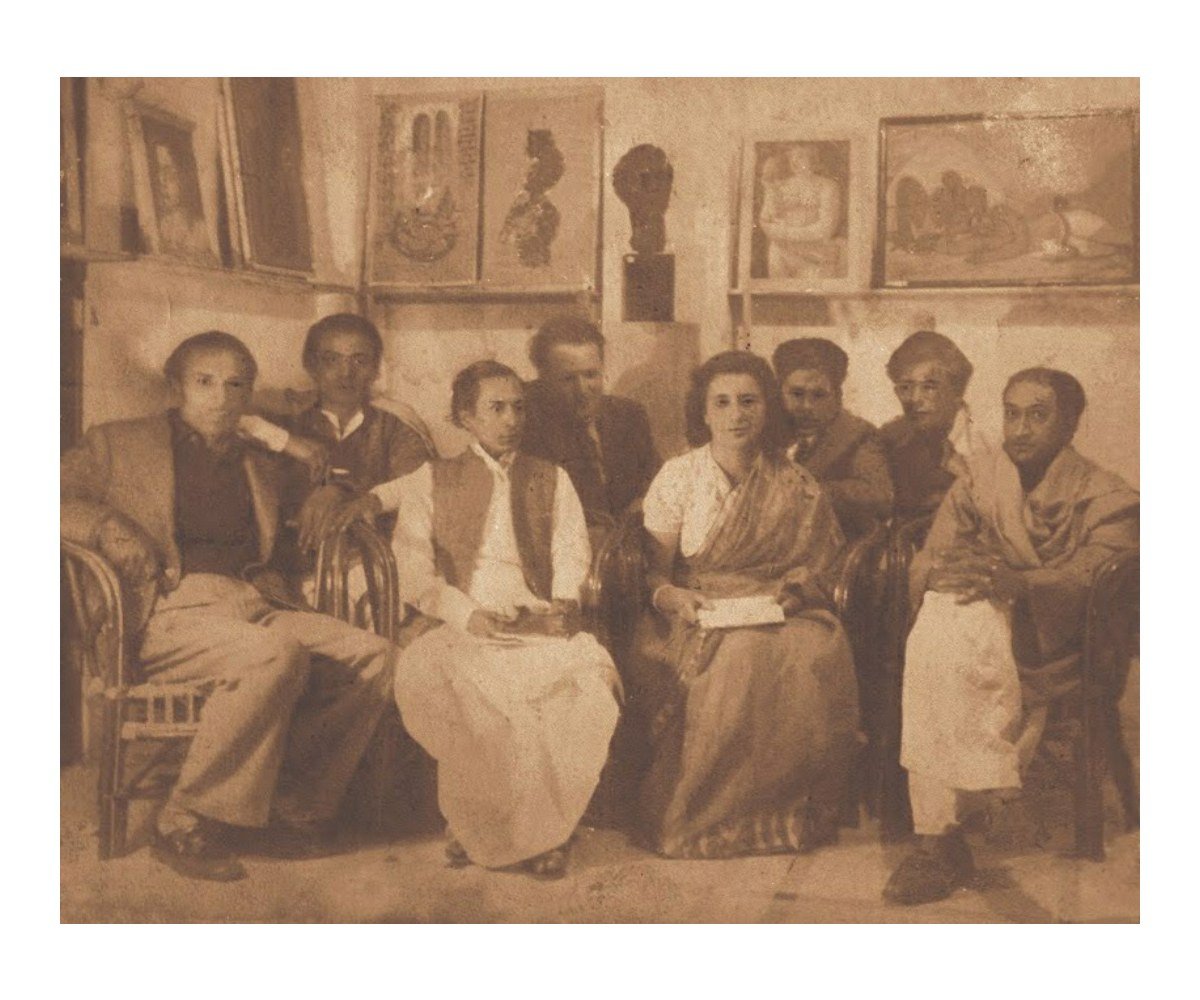
A widely used eight-name early list is Prodosh Das Gupta, Kamala Das Gupta, Gopal Ghose, Paritosh Sen, Nirode Mazumdar, Subho Tagore, Rathin Maitra and Prankrishna Pal. The NGMA overview identifies six founding artists, leaving Rathin Maitra and Prankrishna Pal outside that specific founder list; other educational accounts describe eight initial members. Critical Collective identifies the eight as participants in the first exhibition it dates to 1945. Use the list with its label rather than claiming every source gives an identical founding register.
| Artist | Role / field to remember |
|---|---|
| Prodosh Das Gupta and Kamala Das Gupta | Sculptors in the early group; sculpture is part of the history, not an optional addition. |
| Gopal Ghose | Painter; expressive handling of landscape and colour. |
| Paritosh Sen | Painter; urban life, figuration and modernist experimentation. |
| Nirode Mazumdar and Subho Tagore | Painters in the founding / early circle. |
| Rathin Maitra and Prankrishna Pal | Part of the commonly cited eight-name early circle; distinguish early exhibition participation from a source’s narrower founder list. |
What did the group seek?
Its motto presents art as “international and interdependent.” For revision, connect this with cultural exchange, contemporary experience and artistic independence. Human suffering could demand a new form of expression, but it did not require every member to become a documentary famine artist. A group can share a historical urgency without sharing a single political doctrine or technique.
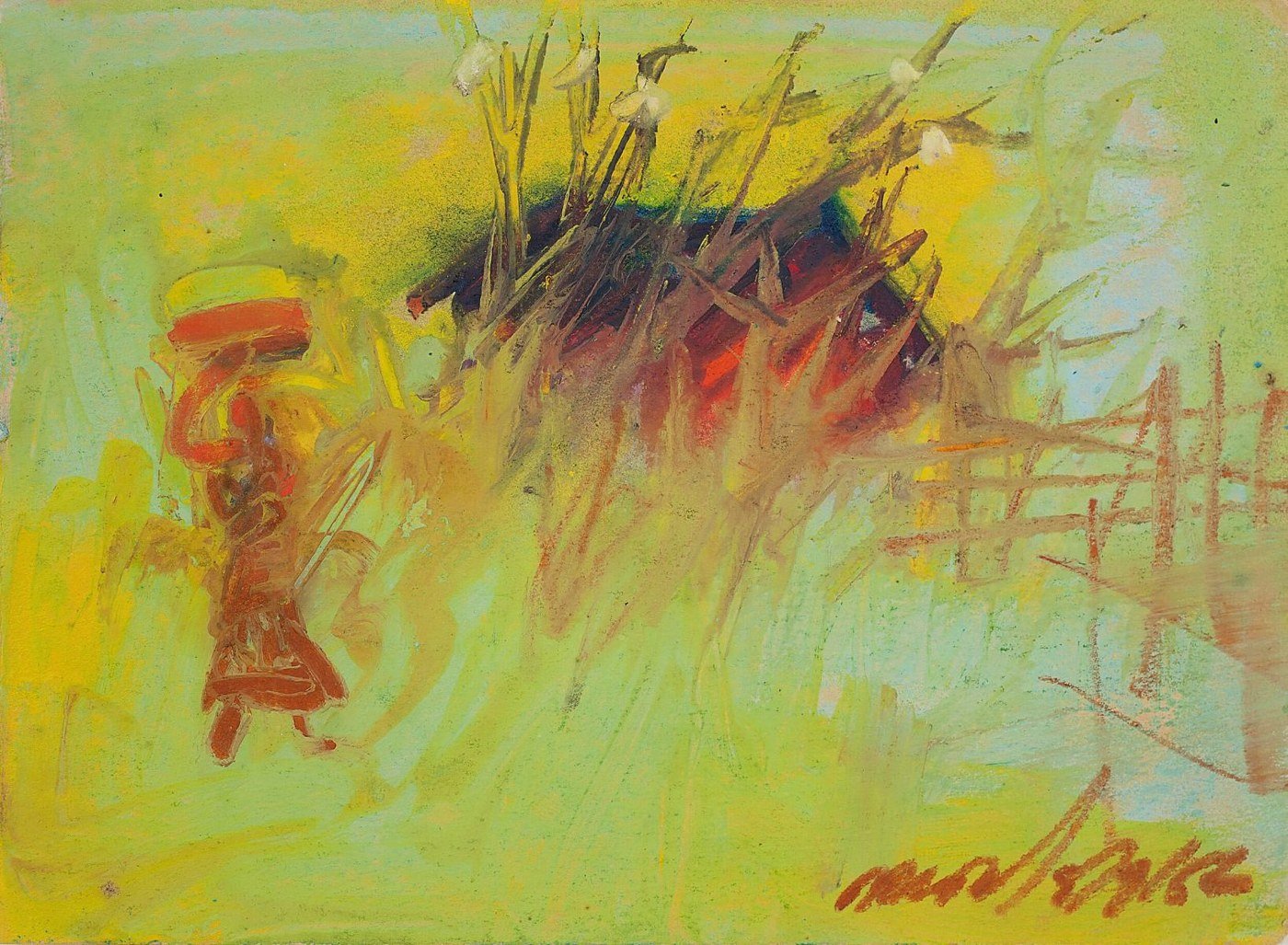
The distinction matters visually. A sculpture, a figure painting and an expressive landscape can belong to the same collective history. The absence of a famine scene in a particular painting does not remove its artist from that history.
Reference: NGMA overview of the Calcutta Group.
Reference: Critical Collective: Sanjoy Mallik on the group’s exhibition and membership history.
Reference: Sanjoy Kumar Mallik on Klaus Fischer’s Calcutta Group essay.
4. Progressive Artists’ Group, Bombay: the six founders
| Formation | Place | Exhibition milestone |
|---|---|---|
| 1947; formally associated with the meeting of 15 December | Bombay, now Mumbai | The major inaugural group exhibition at the Bombay Art Society’s Salon was held in 1949. |
The Bombay Progressive Artists’ Group, usually abbreviated PAG, emerged in the year of Independence and Partition. F. N. Souza was a central organiser and spokesperson. The artists argued for freedom to develop a modern pictorial language, engaging international modernism and Indian experience. Their diverse religious and social backgrounds are significant to the collective’s place in post-Independence cultural history.
| Founder | Revision anchor |
|---|---|
| F. N. Souza | Francis Newton Souza; painter and forceful spokesperson. |
| S. H. Raza | Sayed Haider Raza; painting. Do not project his much later Bindu imagery onto every early work. |
| M. F. Husain | Maqbool Fida Husain; painting and a wider practice across media. |
| K. H. Ara | Krishnaji Howlaji Ara; painting, including still life and the figure. |
| H. A. Gade | Hari Ambadas Gade; painting. He is not the Group 1890 artist known simply as Ambadas. |
| S. K. Bakre | Sadanand K. Bakre; the sculptor among the original six, also a painter. |
Aims: a shared freedom, not six identical styles
The label Progressive does not mean that every work must illustrate a party programme or social-realist narrative. Compare Souza’s figure, Husain’s monumental rural imagery and Ara’s still life: the different choices are part of the point. Learning one colour palette or brushstroke as “the PAG style” would erase the group’s range.

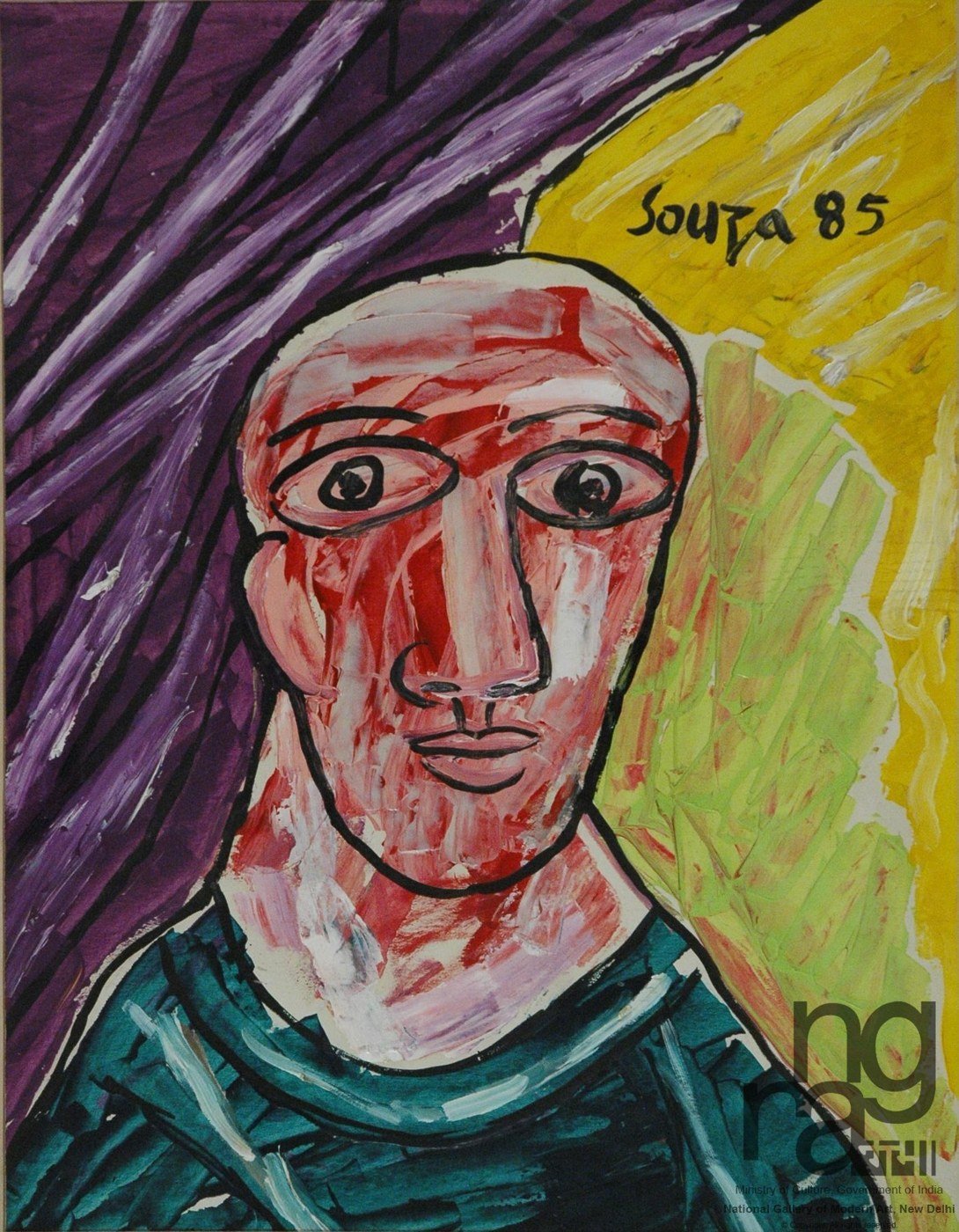
Founders versus the wider Progressive circle
Krishen Khanna, V. S. Gaitonde, Akbar Padamsee, Tyeb Mehta, Ram Kumar, Bal Chhabda and others are discussed in relation to the wider Progressive milieu. Their relationship should be specified through an exhibition, membership history or later association. None should replace a name in the original six-founder answer.
An artist’s individual career also extends beyond the collective’s active years. Souza moved to London in 1949 and Raza to Paris in 1950. Later overseas work can illuminate their development, but it is not evidence that the group was founded in London or Paris. The collective’s legacy is much longer than its period of regular activity.
Reference: Ratan Parimoo and Nalini Bhagwat: Progressive Artists Group of Bombay, an overview.
Reference: Sarmaya: founders and the wider Progressive circle.
Reference: Jehangir Nicholson Art Foundation: F. N. Souza.
5. Delhi Shilpi Chakra: artists, public life and mutual support
| Formation | Place | Motto |
|---|---|---|
| 25 March 1949 | New Delhi | “Art Illuminates Life” |
Also written Delhi Silpi Chakra, the collective created a space for artists to exhibit, discuss and sustain their practice in a capital transformed by Partition. Several artists had moved from Lahore to Delhi. The collective addressed the practical need for networks and audiences as well as the freedom to make new work.
The five founders to remember are B. C. Sanyal, P. N. Mago, Kanwal Krishna, K. S. Kulkarni and Dhanraj Bhagat. Sanyal was a painter and sculptor; Mago was also an educator, writer and critic; Bhagat is a major sculptural presence. The history cannot be reduced to a painters’ club.
What made the Chakra distinctive?
Exhibitions, discussions and neighbourhood outreach helped bring art into public life. Support also meant finding ways for work to be seen and bought. Its 1949 gallery initiative with Dhoomimal and its later Shankar Market premises, acquired in 1957, are useful institutional milestones. They explain how a collective can help create an art environment without imposing one style.
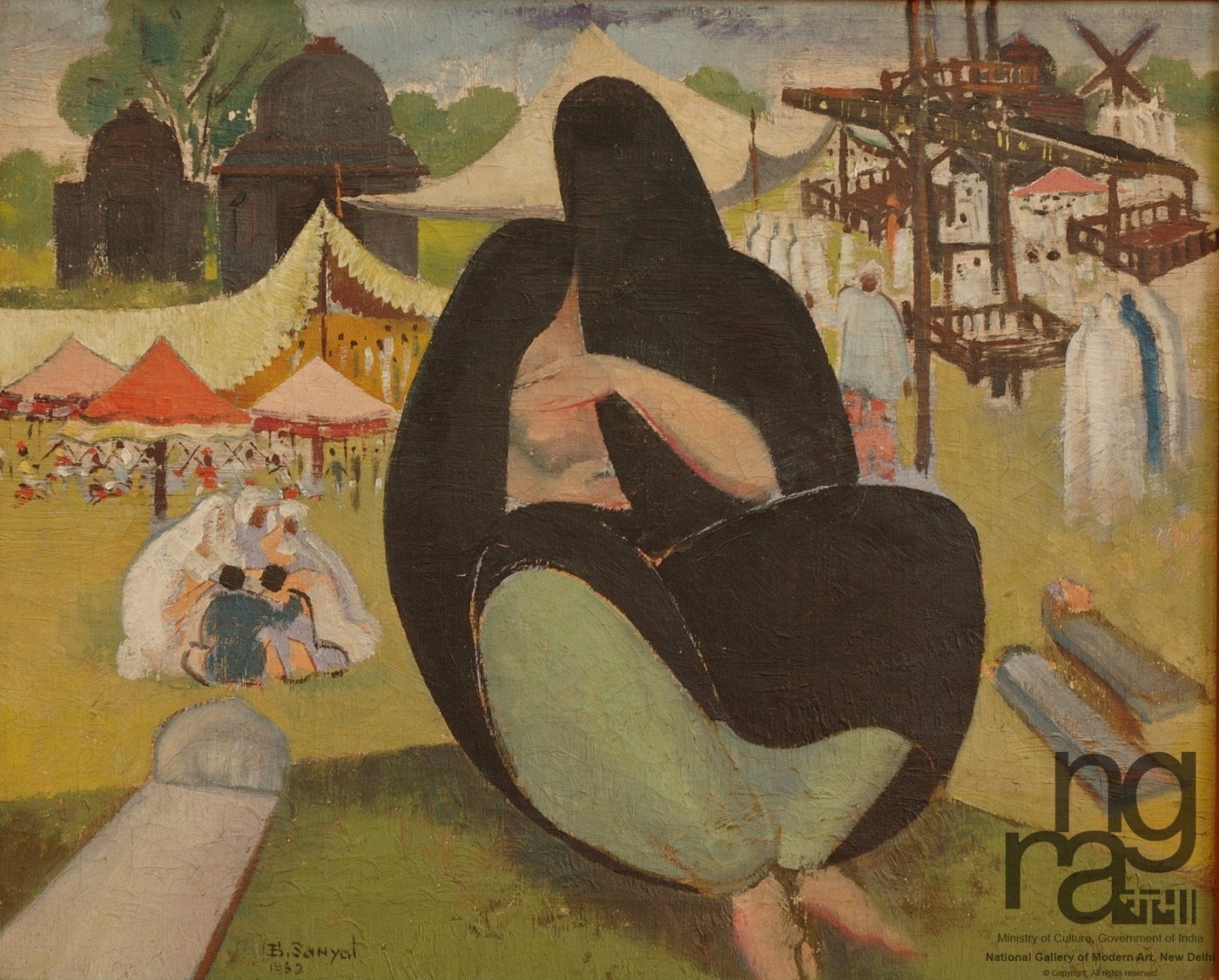
Devayani Krishna, Amar Nath Sehgal, Satish Gujral, Avinash Chandra, Ram Kumar, Arpita Singh, Paramjit Singh and Rameshwar Broota appear in accounts of the wider Chakra network. An exhibition retrospective can include founders, later members, office-bearers, associates and guests. Do not transfer all its exhibitors into the 1949 founder list.
Reference: Dhoomimal Gallery: Outliers, Rebels, Disruptors.
Reference: DAG: Drawing a Nation, the Delhi Silpi Chakra.
Reference: Impart: institutional timeline and wider membership.
6. Group 1890: formation in 1962, exhibition in 1963
| Formation | Name | Exhibition |
|---|---|---|
| 25–26 August 1962, Bhavnagar, Gujarat | From house number 1890, the Pandya home where artists met. | 20–29 October 1963, Rabindra Bhavan, New Delhi; inaugurated by Jawaharlal Nehru. |
J. Swaminathan was the group’s leading intellectual voice, and Jeram Patel its secretary. The number does not identify a nineteenth-century movement. Keeping 1890, 1962 and 1963 in separate mental boxes resolves one of the easiest errors in chronology questions.
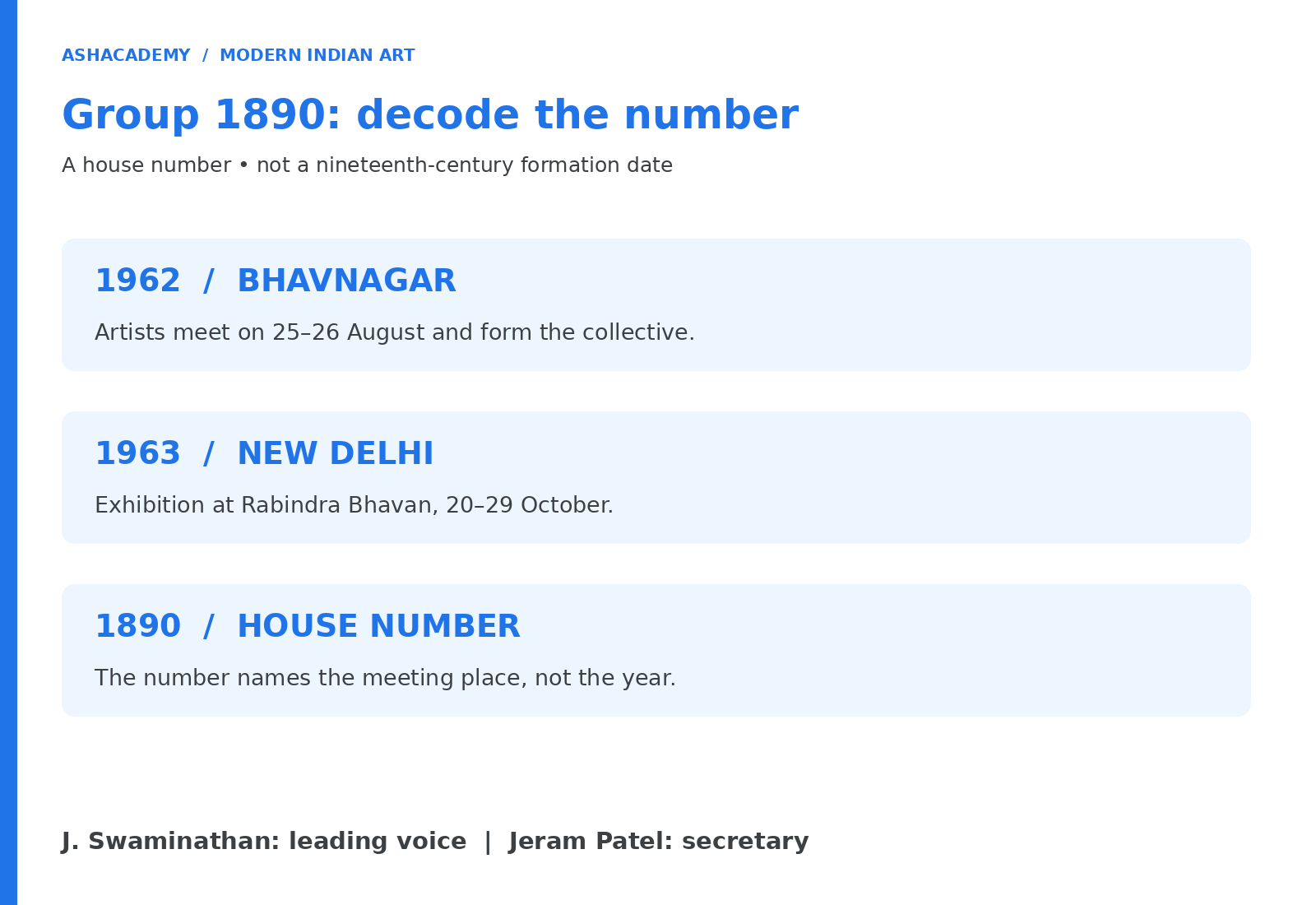
The twelve members
| Members 1–4 | Members 5–8 | Members 9–12 |
|---|---|---|
| J. Swaminathan | Himmat Shah | M. Reddeppa Naidu |
| Jeram Patel | Gulammohammed Sheikh | Eric Bowen |
| Ambadas | Jyoti Bhatt | Balkrishna Patel |
| Rajesh Mehra | Raghav Kaneria | S. G. Nikam |
S. G. Nikam appears as S. G. Nigam in some published lists; Reddeppa / Reddappa Naidu and Gulammohammed / Gulam Mohammed Sheikh also appear in variant spellings. These do not justify adding extra members. In a notes table, retain a consistent form and recognise the variants.
Manifesto and artistic position
The manifesto questioned ready-made identities for Indian art, whether derived from revivalist formulas or mechanically borrowed modernist languages. It defended the autonomy of artistic experience rather than prescribing one medium or a uniform appearance. Octavio Paz, then Mexico’s ambassador to India, wrote the introduction to the exhibition catalogue. He was not one of the twelve artist-members.
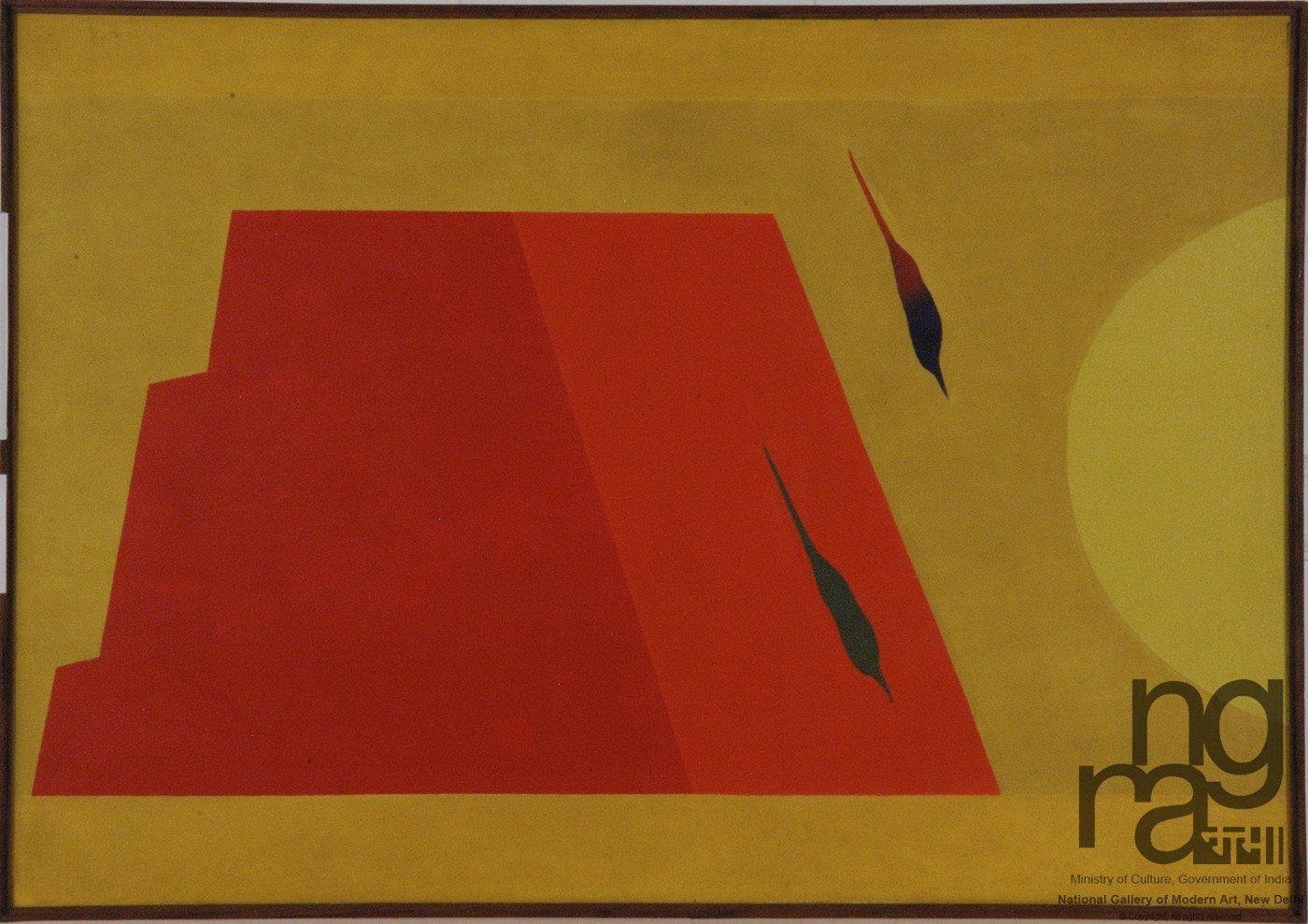
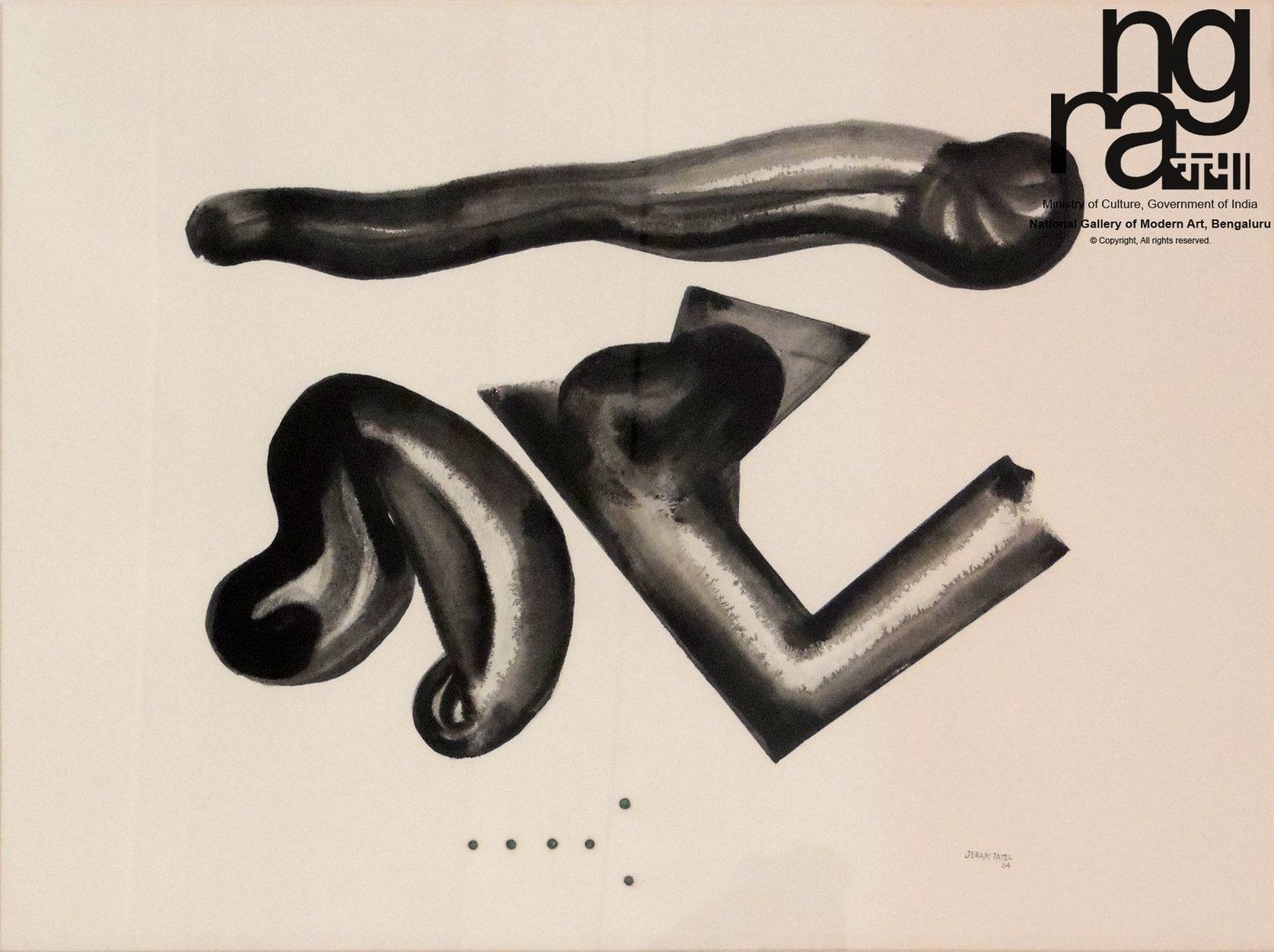
These two reproductions illustrate why a membership list cannot be replaced by a visual stereotype. Swaminathan’s isolated forms and Patel’s ink masses ask different questions of colour, surface and space. Patel’s wider practice also includes burnt-wood experiments, but the ink work reproduced here must retain its own medium and date.
Reference: J. Swaminathan: Group 1890 manifesto.
Reference: Pran Nath Mago on Group 1890.
Reference: Routledge Encyclopedia of Modernism: twelve members and the 1963 show.
7. Cholamandal Artists’ Village: a community, not one painting style
| Established | Location | Leading founder |
|---|---|---|
| 1966 | Injambakkam, near Madras, now Chennai, Tamil Nadu | K. C. S. Paniker, with fellow artists. |
Cholamandal brought the problem of artistic livelihood into the organisation of a community. Artists needed workspaces, interaction and a sustainable way of continuing practice after art-school training. Living and working together, producing art and craft, and sharing resources offered a practical answer. The village should be studied as an artist-run cooperative and residential initiative.
The name draws on the region’s Chola / Cholamandalam association. It does not date the village to the medieval Chola period. The foundation belongs to modern India, in 1966.
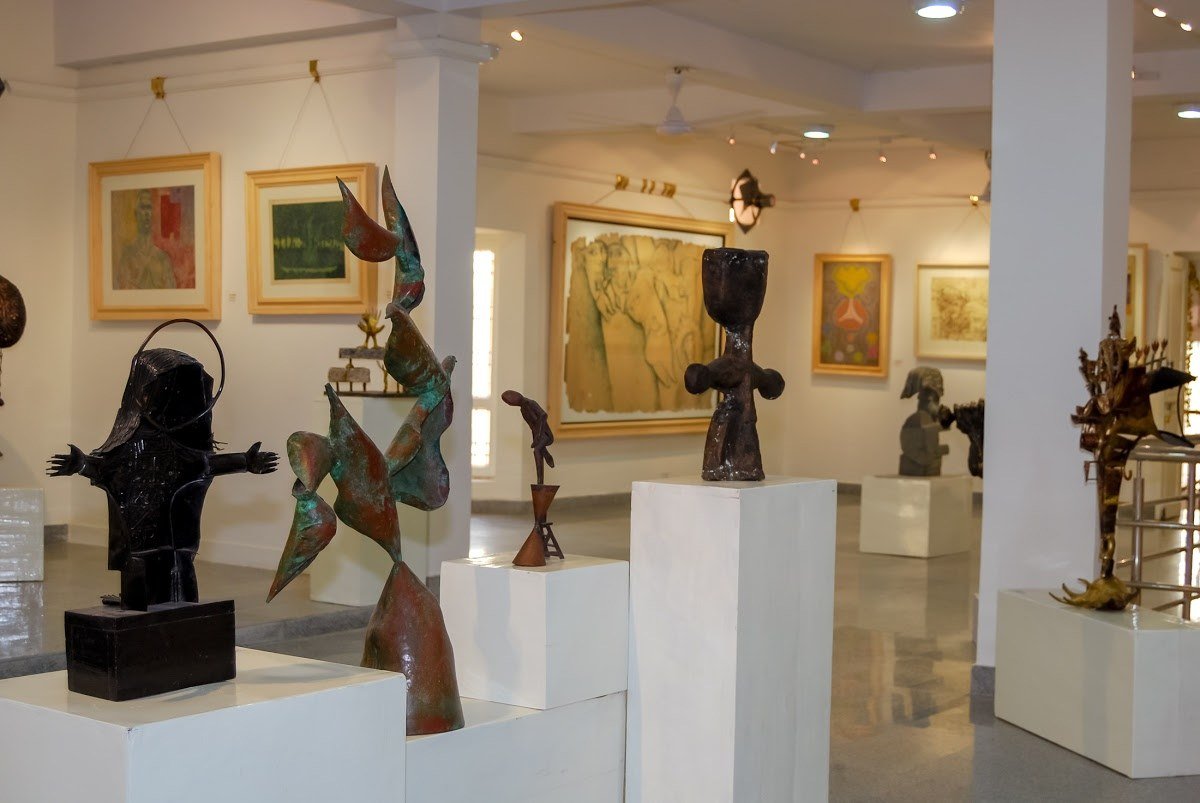
Three related dates to keep separate
| Date | Formation | Why it matters |
|---|---|---|
| 1944 | Progressive Painters’ Association, Madras, associated with Paniker | An earlier organisational context; not the Bombay PAG of 1947. |
| 1963 | Artists’ Handicrafts Association | A framework for craft production, sales and collective support. |
| 1966 | Cholamandal Artists’ Village | The residential and working community at Injambakkam. |
Batik and other craft practices could generate income alongside painting and sculpture. This is why Cholamandal matters in a history of artists’ groups: it asks how artists can continue to work, not simply what a modern picture should look like. It also complicates a rigid division between fine art and craft.
Artists and the Madras Movement
S. G. Vasudev is a founder-member. Accounts of the village’s early and wider community also include Anila Jacob, Arnawaz Driver / Arnawaz Vasudev, K. Ramanujam, K. M. Adimoolam, C. Dakshinamoorthy, V. Viswanathan, K. V. Haridasan and M. Senathipathi. Their dates of arrival and forms of association differ. They should not be presented as a single fixed founding roster without a dated source.
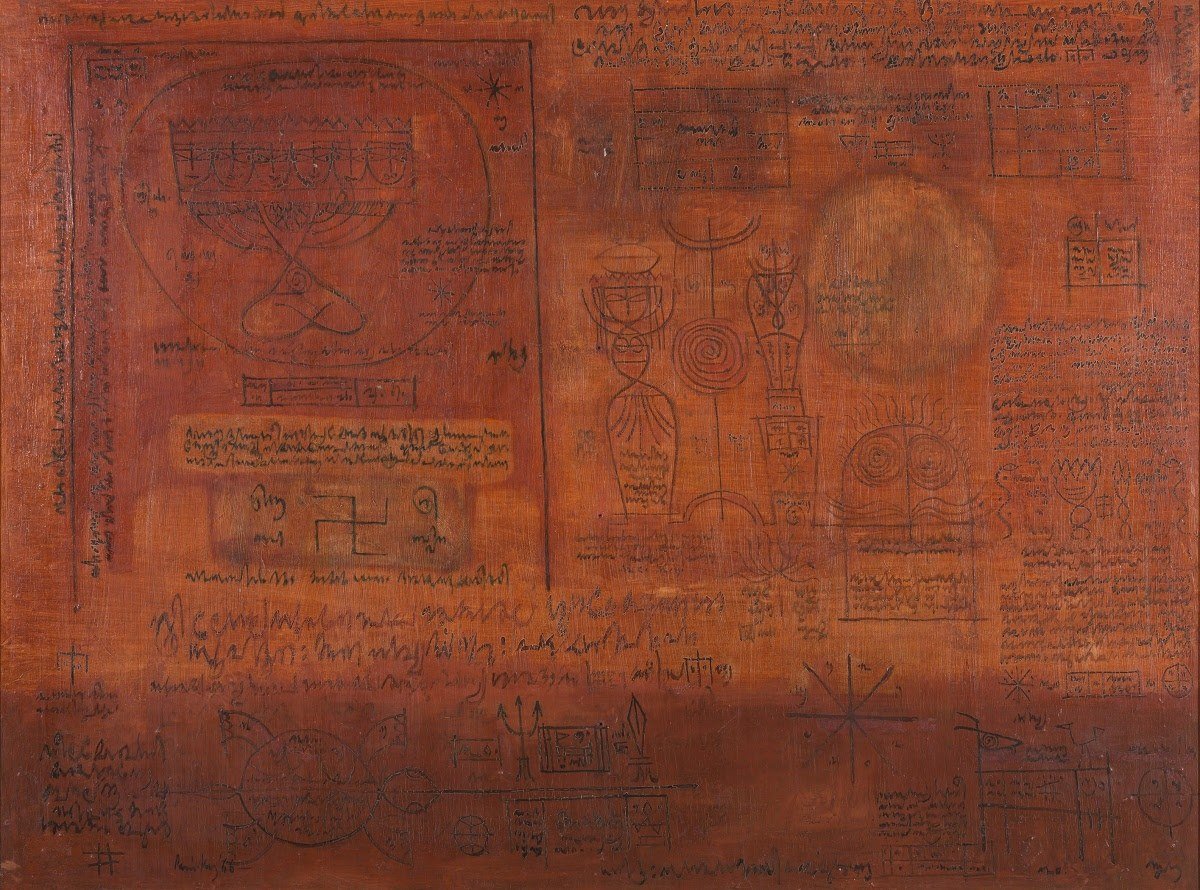
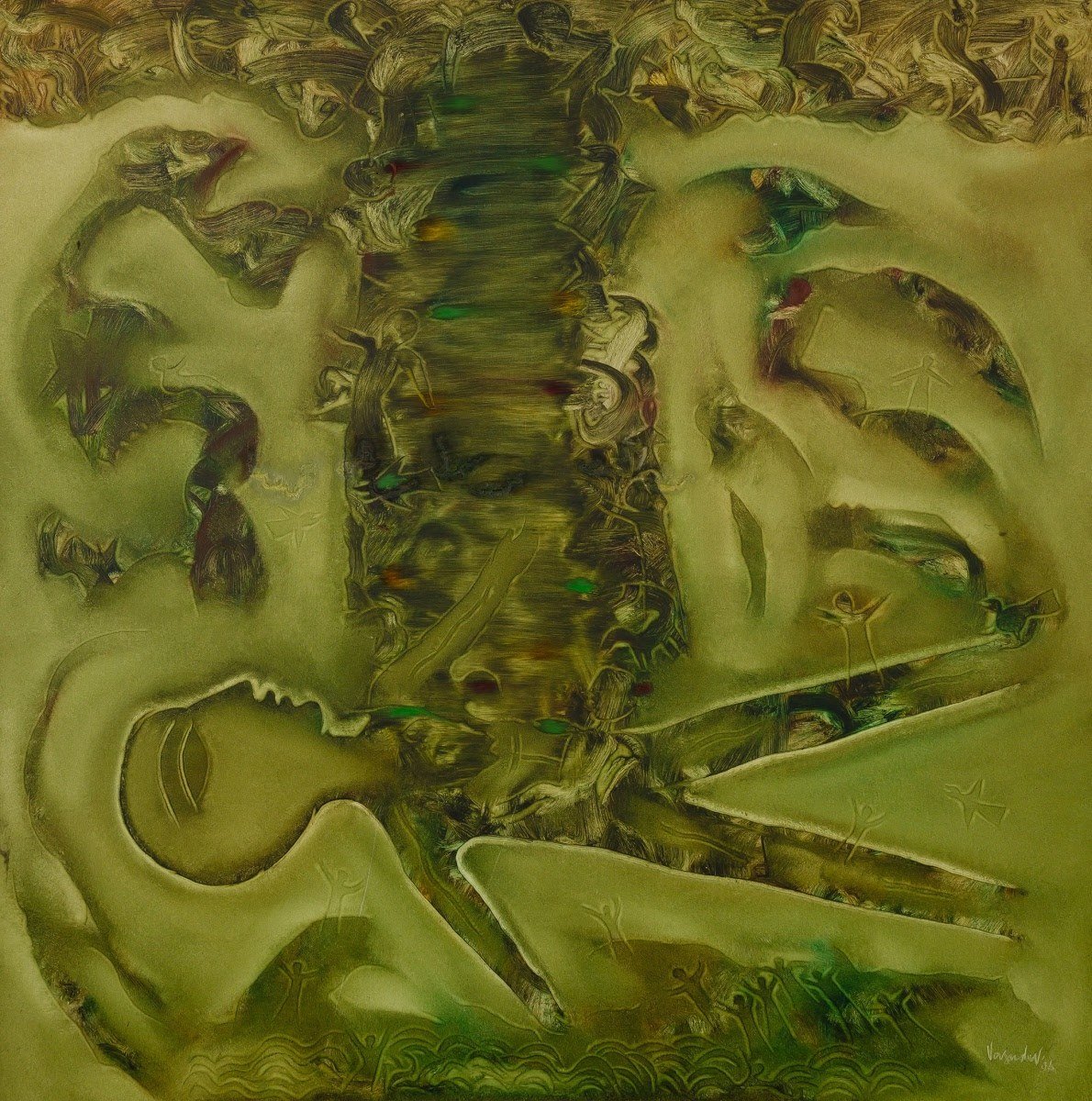
Paniker’s script-like surfaces and Vasudev’s organic imagery show different ways of making a modern visual language. A shared institutional or regional setting does not mean identical motifs. The Madras Art Movement is a broader development connected with art-school training, artists and evolving practices; Cholamandal is one major site within that history.
Reference: Cholamandal Artists’ Village: Museum of the Madras Movement.
Reference: Jehangir Nicholson Art Foundation: S. G. Vasudev, founder-member.
Reference: Impart: cooperative structure, craft production and community.
Reference: Kerala Museums: K. C. S. Paniker Gallery and the Progressive Painters’ Association.
8. Comparative timeline: formation versus public milestones
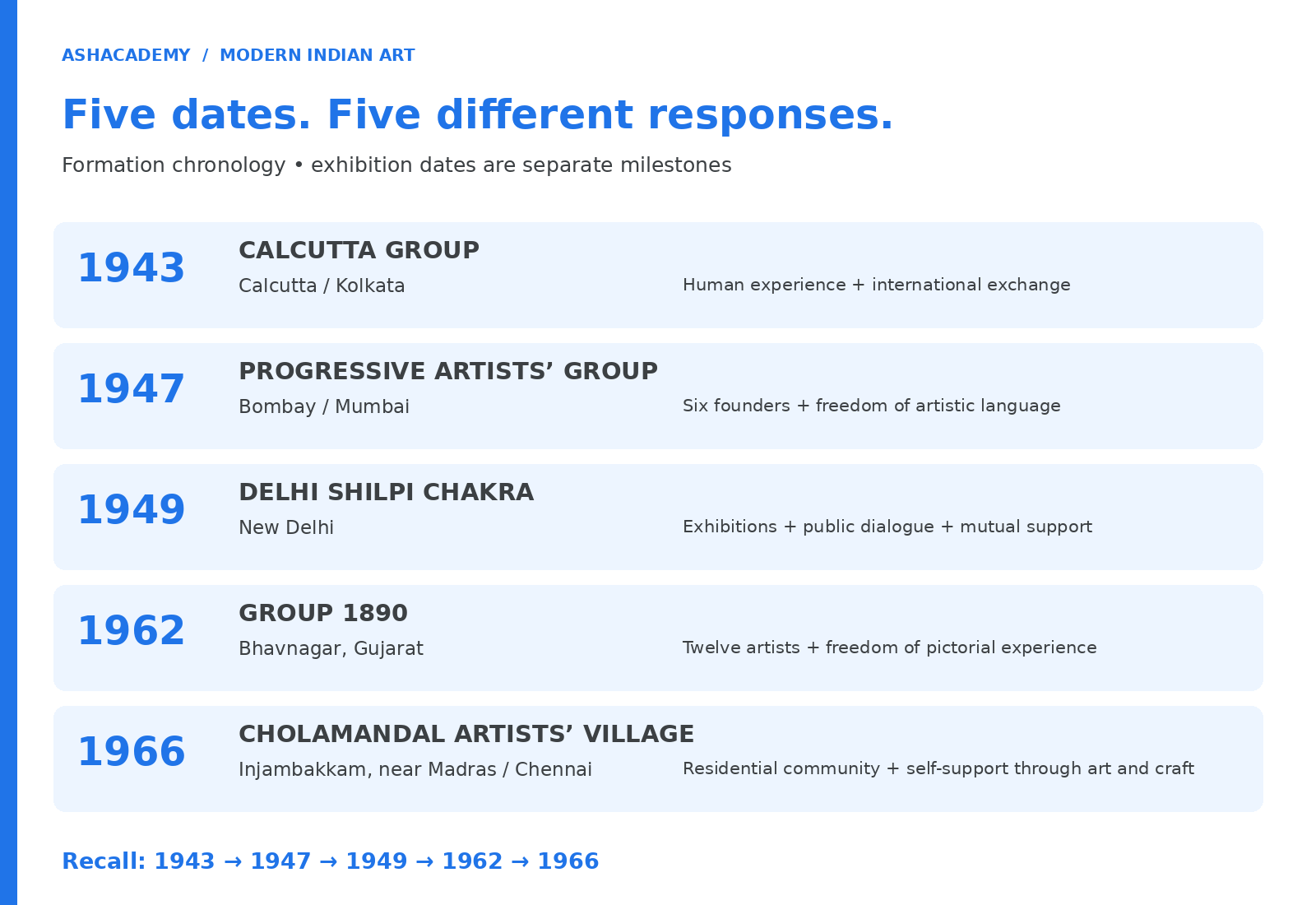
| Year | Event | Do not confuse it with |
|---|---|---|
| 1943 | Calcutta Group forms. | The Bengal School or a universal start date for all Indian modern art. |
| 1944 | Progressive Painters’ Association, Madras. | The Bombay Progressive Artists’ Group. |
| 1947 | Bombay Progressive Artists’ Group forms. | Its major inaugural group exhibition in 1949. |
| 1949 | Delhi Shilpi Chakra forms on 25 March; Bombay PAG exhibition at Bombay Art Society’s Salon. | A claim that the two groups were founded together. |
| 1950 | Calcutta Group and Bombay Progressives exhibit together in Calcutta. | A merger of all their members into one founding list. |
| 1957 | Delhi Shilpi Chakra acquires Shankar Market premises. | Its foundation in 1949. |
| 1962 | Group 1890 forms at Bhavnagar. | A group founded in 1890 or in the exhibition year 1963. |
| 1963 | Group 1890 exhibition in New Delhi; Artists’ Handicrafts Association forms in Madras. | A single organisation: these are separate developments. |
| 1966 | Cholamandal Artists’ Village established. | The earlier association or the later museum. |
| 2009 | Museum of the Madras Movement opens at Cholamandal. | The village’s founding year. |
9. Who belonged to which group? Artist-to-group revision table
| Artist / person | Correct connection | Status or caution |
|---|---|---|
| Prodosh Das Gupta; Kamala Das Gupta | Calcutta Group | Founding / early core; remember sculpture. |
| Nirode Mazumdar; Gopal Ghose; Paritosh Sen; Subho Tagore | Calcutta Group | Founding / early core. |
| Rathin Maitra; Prankrishna Pal | Calcutta Group | Early eight-name circle; founder lists vary by source. |
| F. N. Souza; S. H. Raza; M. F. Husain | Bombay PAG | Three of the six original founders. |
| K. H. Ara; H. A. Gade; S. K. Bakre | Bombay PAG | The other three original founders. |
| Krishen Khanna; Tyeb Mehta; V. S. Gaitonde; Akbar Padamsee | Wider Progressive circle | Not replacements for the original six. |
| B. C. Sanyal; P. N. Mago; Kanwal Krishna; K. S. Kulkarni; Dhanraj Bhagat | Delhi Shilpi Chakra | Five founders. |
| J. Swaminathan; Jeram Patel; Ambadas; Rajesh Mehra | Group 1890 | Founding members; Swaminathan the leading voice, Patel secretary. |
| Himmat Shah; Gulammohammed Sheikh; Jyoti Bhatt; Raghav Kaneria | Group 1890 | Founding members. |
| M. Reddeppa Naidu; Eric Bowen; Balkrishna Patel; S. G. Nikam | Group 1890 | Founding members; note spelling variants. |
| K. C. S. Paniker | Cholamandal Artists’ Village | Leading founder; also associated with Madras’s Progressive Painters’ Association. |
| S. G. Vasudev | Cholamandal Artists’ Village | Founder-member; later worked from Bengaluru. |
| Anila Jacob; Arnawaz Driver; K. Ramanujam and others | Cholamandal’s community history | Check the particular person’s role and residence dates. |
| Octavio Paz | Group 1890 exhibition | Catalogue introduction; not an artist-member. |
| Jawaharlal Nehru | Group 1890 exhibition | Inaugurator; not the founder of the collective. |
10. Common examination traps, corrected
| Misleading shortcut | Better revision answer |
|---|---|
| Group 1890 was founded in 1890. | It formed in 1962; 1890 was a house number. |
| The Bombay PAG began with every famous Bombay modernist. | Name the six founders before discussing the wider circle. |
| H. A. Gade and Ambadas are the same artist. | H. A. Gade is a Bombay PAG founder; Ambadas is a Group 1890 member. |
| All Calcutta modernists founded the Calcutta Group. | Fame, regional origin and exhibition participation do not establish founding status. |
| Kamala Das Gupta can be omitted because this is a painters’ history. | Sculpture and women artists are essential to the early group’s history. |
| Cholamandal is another name for the Madras Art Movement. | The community is an institution and site within a wider artistic development. |
| Every work by a member was made during the group’s existence. | Check the artwork date independently. |
| A group is identifiable from one fixed style. | These formations include varied personal practices. |
| P. N. Mago is only a reference-book author. | He was also a Delhi Shilpi Chakra founder, artist and educator. |
A practical note-making format is: name → formation date → place → founder list → aim → exhibition or institutional milestone → one securely captioned artwork. Add a final line for a likely confusion. This makes the notes useful for chronology, matching, statement-based and visual-identification practice.
11. Original practice questions with explanations
The following are original revision questions prepared for this article. They are not presented as previous-year questions.
1. Arrange the five formations in chronological order.
Calcutta Group, 1943; Bombay PAG, 1947; Delhi Shilpi Chakra, 1949; Group 1890, 1962; Cholamandal Artists’ Village, 1966.
2. Which name is not among the original six Bombay PAG founders: Ara, Bakre, Gade or Tyeb Mehta?
Tyeb Mehta. The six are Souza, Raza, Husain, Ara, Gade and Bakre.
3. Which formation is connected with the motto Art Illuminates Life?
Delhi Shilpi Chakra, founded in New Delhi on 25 March 1949.
4. Match the organiser with the formation: Paniker, Swaminathan, Sanyal.
Paniker: Cholamandal; Swaminathan: Group 1890; Sanyal: Delhi Shilpi Chakra. The answer gives a principal connection, not the entirety of each career.
5. What do 1890, 1962 and 1963 refer to in Group 1890’s history?
1890: house number; 1962: formation; 1963: exhibition at Rabindra Bhavan, New Delhi.
6. Why is it incorrect to call Souza’s Self Portrait of 1985 a painting from the first PAG show?
The artwork date is decades later than the 1949 exhibition. Membership and the date of a particular work are separate facts.
7. Who was the sculptor among Bombay PAG’s original six?
S. K. Bakre. Other founders also worked across media, but Bakre is the standard sculptor answer in this founding list.
8. Why should Cholamandal be separated from a style-based school?
It organised living, working and livelihood through a community. Its artists developed diverse individual languages.
9. Were Octavio Paz and Jawaharlal Nehru Group 1890 members?
No. Paz wrote the catalogue introduction; Nehru inaugurated the 1963 exhibition.
10. What is the distinction between the Progressive Painters’ Association and Bombay PAG?
The former is associated with Madras and Paniker from 1944; the latter formed in Bombay in 1947.
12. Frequently asked questions
What are the formation years of the major modern Indian art groups covered here?
Calcutta Group: 1943; Bombay Progressive Artists’ Group: 1947; Delhi Shilpi Chakra: 1949; Group 1890: 1962; Cholamandal Artists’ Village: 1966.
Who founded the Progressive Artists’ Group in Bombay?
The six founders were F. N. Souza, S. H. Raza, M. F. Husain, K. H. Ara, H. A. Gade and S. K. Bakre. Souza was a central organiser and spokesperson.
Was Group 1890 formed in 1962 or 1963?
It formed in Bhavnagar in August 1962. Its first and only original group exhibition was held in New Delhi in October 1963.
Who founded Cholamandal Artists’ Village?
K. C. S. Paniker established the village with fellow artists in 1966 at Injambakkam near Madras, now Chennai. S. G. Vasudev is a founder-member.
Is the Calcutta Group the same as the Bengal School?
No. The Calcutta Group formed in 1943 and developed a modernist collective position. Do not confuse regional location with a single school or organisation.
Can one artist be connected with more than one art group or institution?
Yes. Careers cross cities, institutions and networks. State the exact role: founder, member, exhibitor, associate, teacher or resident.
Are all the illustrated artworks from the groups’ founding exhibitions?
No. Captions identify dates and explain when an image illustrates a member’s later practice. The article does not invent exhibition provenance.
13. Sources, image credits and reading further
This independent ashacademy study guide uses museum records, institutional collections, exhibition histories and published scholarship. It is not an official UGC or NTA publication. For exam coverage, consult the official Visual Arts syllabus, Code 79.
For deeper reading, Pran Nath Mago’s Contemporary Art in India: A Perspective is particularly useful for groups and institutions. Read the group histories alongside R. Siva Kumar’s account of modern Indian art and specialist exhibition catalogues. These are complementary perspectives; a concise membership table cannot reproduce the full debates of Indian modernism.
Historical sources
- NGMA: Calcutta Group
- Critical Collective: Calcutta Group history
- Impart: Calcutta Group
- Sarmaya: Indian Art Breaks Free
- Dhoomimal: Delhi Silpi Chakra retrospective
- DAG: Drawing a Nation
- Critical Collective: Group 1890 manifesto
- Routledge: Group 1890
- Cholamandal: Museum of the Madras Movement
- JNAF: S. G. Vasudev
- Kerala Museums: K. C. S. Paniker Gallery
Reproduced artworks and photographs
- Gopal Ghose, Untitled, 1962. Gouache and pastel on paper. DAG, catalogue code ghoseg255c. Collection / source record.
- Calcutta Group: archival photograph, dated 1943 in the source. Reproduced from Impart Encyclopedia of Art; source credits Nirode Mazumdar / Wikimedia Commons. Collection / source record.
- F. N. Souza, Self Portrait, 1985. Acrylic on paper. NGMA, New Delhi, accession ngma-12282. Date recorded in the inscription. Collection / source record.
- M. F. Husain, Zamin, 1955–56. Oil on canvas. NGMA, New Delhi, via Google Arts & Culture. The record labels 1955/1956; its description refers to 1955. Collection / source record.
- B. C. Sanyal, At the Nizamuddin Fair, 1982. Oil on canvas. NGMA, New Delhi, accession ngma-01296. Date recorded in the inscription. Collection / source record.
- J. Swaminathan, Untitled, undated in the linked record. Oil on canvas. NGMA, New Delhi, accession ngma-12603. Collection / source record.
- Jeram Patel, Untitled, 2004. Ink on paper. NGMA, Bengaluru, accession acc-no-16321. Collection / source record.
- K. C. S. Paniker, Words and Symbols, 1966. Oil on board. Cholamandal Artists’ Village / Museum of the Madras Movement, via Google Arts & Culture. Collection / source record.
- S. G. Vasudev, Tree of Life, 2006. Oil on canvas. Cholamandal Artists’ Village, via Google Arts & Culture. Collection / source record.
- Museum of the Madras Movement, Cholamandal. Institutional photograph supplied by Cholamandal Artists’ Village through Google Arts & Culture. The museum opened in 2009. Collection / source record.
Artwork reproductions are presented for close study and comparison with source credits; copyright and reproduction rights remain with the respective artists, estates, photographers and institutions. They are not claimed to be public-domain images. Colours, proportions and existing watermarks are retained. The cover layout and three study charts are original ashacademy teaching graphics. The archive image in the cover is the same credited photograph shown in the article.

You may also like
Fauvism: History, Characteristics, Artists and Important Artworks
Symbolism in Art: History, Characteristics, Artists and Artworks