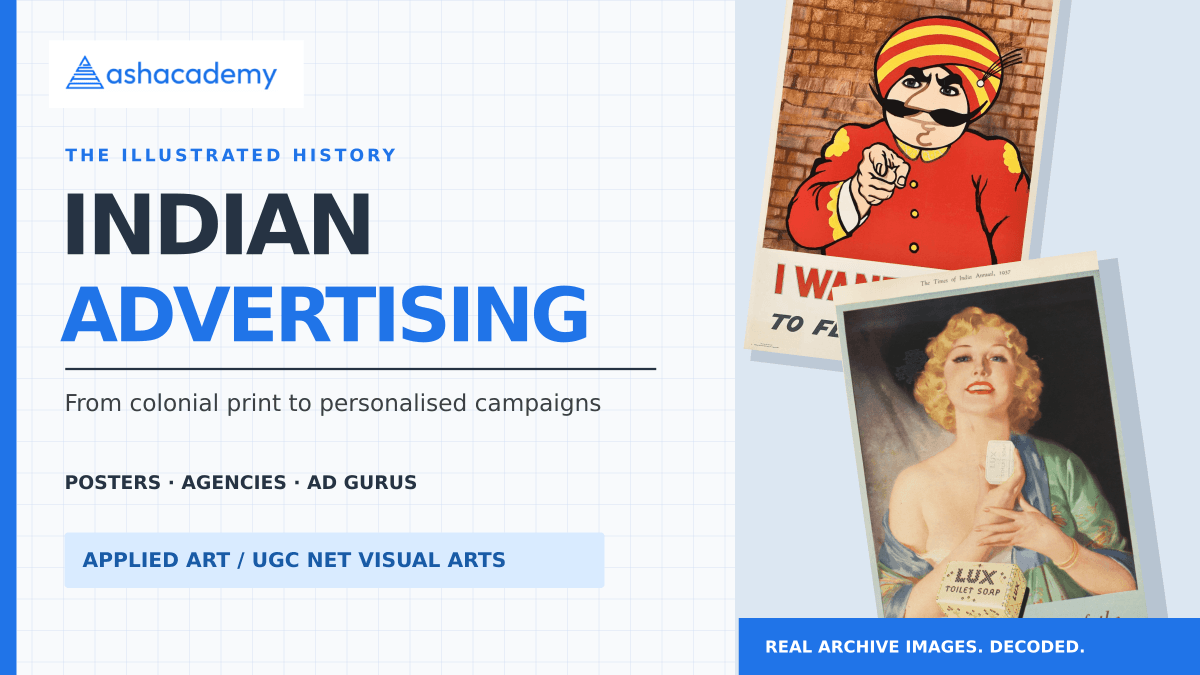
History of Advertising in India: Timeline, Agencies, Ad Gurus and Iconic Campaigns
The history of advertising in India moves from market communication and early printed notices to colonial brand imagery, Swadeshi publicity, Indian agency enterprise, radio, television and personalised digital campaigns. Its most useful story is not just a sequence of famous slogans: it is the changing relationship between commerce, design, technology and society.
This illustrated guide brings together the major phases, agencies, advertising personalities and campaign examples for Applied Art students and UGC NET Visual Arts aspirants. Each example includes context and a design reading. Where an image is a later campaign execution or an editorial reproduction, the caption says so.
1777–1779: surviving Bengal sales handbill · 1780: first printed newspaper · 1946: Maharaja · 1966: Amul Girl · 1976: Doordarshan commercials · 1982: colour TV · 1991: reforms · 2000s: distinctive film storytelling · 2010s onward: mobile, social and personalised advertising.
Syllabus connection: modern advertising, design and visual communication in common Unit VIII, alongside the separately named Elective III: Applied Art. This guide is an illustrated study resource, not a replacement for the official syllabus.
1. Where did advertising in India begin?
Advertising in India developed through several overlapping histories: trade communication, print publishing, colonial commerce, Indian entrepreneurship, broadcasting and, later, digital platforms. There is no defensible single date for every form of advertising. A shop sign and a sponsored television commercial perform related persuasive functions, but belong to different media systems.
Before mass print, sellers could attract attention through spoken announcements, shopfronts, painted signs, product marks and displays at markets and fairs. These are useful predecessors. It is unsafe, however, to identify an ancient seal as “India’s first advertisement” without evidence of its intended commercial use. A mark of ownership, a religious image and an advertisement are not automatically the same thing.
For Applied Art, the central question is how an identifiable sender uses words, images, sound or space to influence an audience. Modern advertising adds repeatable distribution, organised media buying, brand identity and the specialised work of agencies. Its history is therefore also a history of printing, literacy, consumer culture and access to media.
2. The 1777–1779 handbill and the 1780 newspaper milestone
A surviving sales handbill printed by James Augustus Hicky advertises Chinese goods in late eighteenth-century Bengal. SOAS dates it between 1777 and the end of 1779. It survived because it was reused in a book binding. This evidence matters: commercial printing in Bengal existed before the launch of Hicky’s newspaper. It does not establish the earliest advertisement anywhere in the Indian subcontinent.

Hicky’s Bengal Gazette began in Calcutta on 29 January 1780. It is conventionally recognised as India’s first printed newspaper. Its identity as a general advertiser shows the connection between newspaper publishing and commercial notices. Advertisements, shipping information and local announcements helped make the newspaper useful to a trading community.
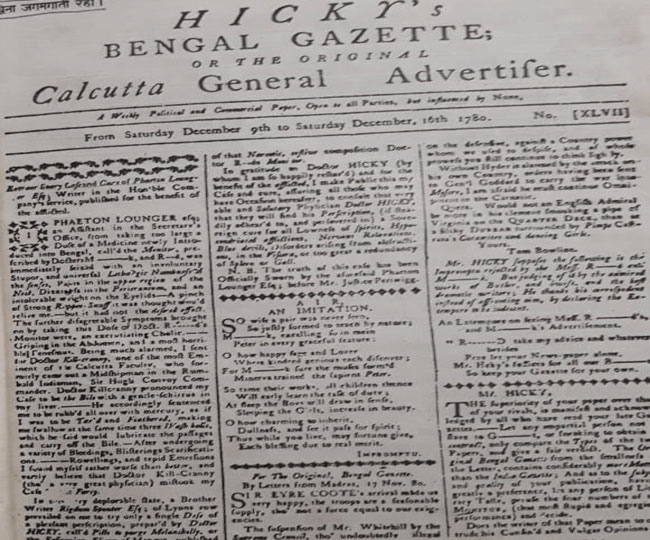
Early notices relied on dense type, columns, lists and specific information: what was available, who sold it and where to enquire. Compare this with a modern brand advertisement that can communicate through a single photograph and almost no copy. The historical shift is from announcing availability towards constructing preference and memory. The two approaches continue to coexist.
Sources: Hicky’s Bengal Gazette, University of Pennsylvania Libraries catalogue.3. Nineteenth-century advertising: newspapers, lithography and the calendar
As newspapers and commercial printing expanded, advertisements addressed an increasingly varied audience: European residents, Indian elites, traders, professionals and emerging urban consumers. Notices for services, medicines, imported goods, auctions and retail establishments sat beside more elaborate display advertising. The audience was never simply “all Indians”; language, purchasing power, location and literacy shaped access.
Lithography, chromolithography and later photographic reproduction widened the range of visual persuasion. A product could be associated with a person, a place, a deity or an aspirational lifestyle. Labels, wrappers, tins and calendars carried the brand beyond the newspaper into shops and homes. A calendar had a particular advantage: its practical use could keep a branded image visible for months.
The Ravi Varma Press, established in 1894, belongs to this wider history of popular image reproduction. Do not confuse Raja Ravi Varma’s paintings, prints issued by the press and later commercial adaptations by other makers. They are related, but not identical objects. Museum collections document prints from the press’s early years; later calendars show how devotional imagery could be combined with branded products.
Sources: The Metropolitan Museum of Art, Lakshmi, Ravi Varma Press, 1894; Ganesh Shivaswamy Foundation, The influence of the Ravi Varma Press.A useful example is the 1927 Vinolia soap calendar incorporating Saraswati imagery, documented in the Ganesh Shivaswamy Foundation exhibition. Its importance is the combination of a familiar sacred image, a useful household object and a commercial name. It is evidence of a specific advertising object, not proof that the artist personally designed every later advertisement using a related image.
Design reading: look for the division between image and product panel, decorative borders, lettering styles and the prominence of the manufacturer’s name. Colonial advertisements also carried ideas about race, class, domesticity and beauty. Those assumptions should be studied critically, rather than repeated as factual claims about the product or its users.
4. European brands in India: arrival, manufacturing and advertising are different dates
Imported brands introduced new packaging, retail networks and ideas of cleanliness, taste, convenience and status. Their advertising did not remain visually uniform: companies adapted celebrity choices, language, illustration and situations to Indian audiences. At the same time, Indian businesses competed through local knowledge, pricing, trust and national identity.
| Brand or company | Documented Indian milestone | How to interpret it |
|---|---|---|
| Sunlight / Lever | Sunlight’s Indian history is traced to 1888 in HUL’s company presentation. | An early market milestone; do not treat it as the launch date of every Lever product. |
| Lifebuoy | 1895 is a company-documented Indian milestone. | A separate brand history from Sunlight. |
| Nestlé | Trading/import presence from 1912; first Indian factory at Moga in 1961. | A gap of decades separates market presence and local manufacturing. |
| Bata | Bata India incorporated in 1931; small manufacturing operations at Konnagar began in 1932. | A company of Czechoslovak origin, not a British-origin brand. |
| Cadbury | Indian operations began in 1948. | A British-origin brand’s post-independence entry, distinct from its much older global history. |
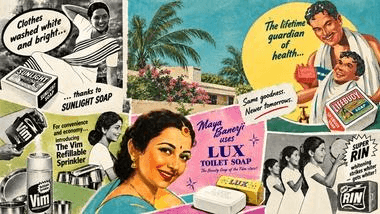
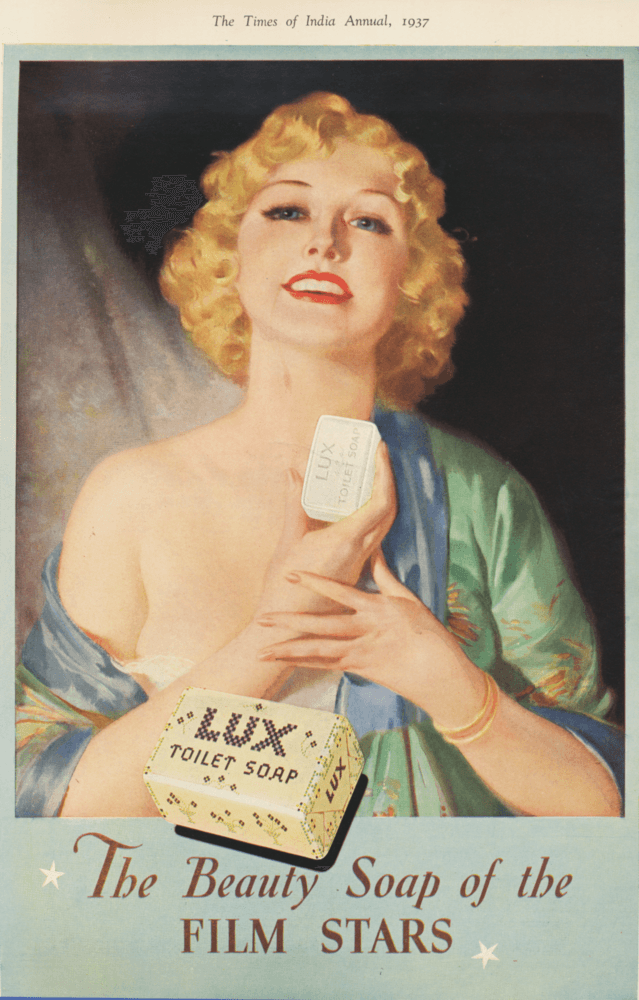
Lux is particularly useful for understanding celebrity-mediated aspiration: the product is presented as access to a world associated with cinema and beauty. Read the advertisement as historical persuasion, not as independent evidence that a soap produces the appearance of a film star. Indian celebrity campaigns later made such brand associations more locally recognisable.
5. Swadeshi, Godrej and the Indian consumer
Swadeshi gave consumption a political dimension. Buying an Indian-made product could be framed as support for Indian enterprise and self-reliance. This did not mean every Indian product used the same imagery or that every consumer bought for the same reason. Advertising linked national feeling to more practical concerns such as reliability, hygiene, price and availability.
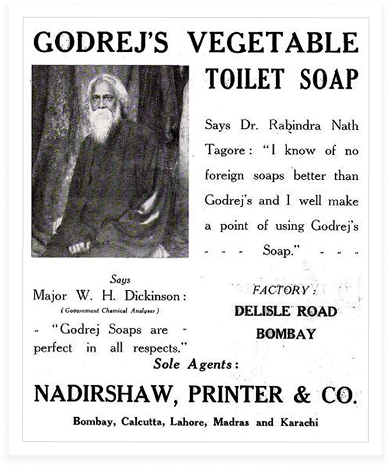
Godrej’s advertising offers a useful comparison with imported soap publicity. Prominent endorsements supplied authority and familiarity, while the product’s Indian identity supplied another reason to choose it. These endorsements should not automatically be described as modern paid influencer contracts: the surviving image does not establish the financial terms of the arrangement.
Sources: Godrej Archives, July–August 2006.The Applied Art lesson is that positioning depends on context. A product can be sold as modern and scientific, nationally meaningful, economical or socially prestigious. The label “Swadeshi” is historically specific; using Indian ornament alone does not prove an advertisement belonged to the Swadeshi movement.
6. The emergence of advertising agencies
An agency could begin by placing advertisements and arranging newspaper space, then expand into copy, artwork, campaign planning, research and account service. The full-service agency was a business organisation as much as a creative studio. Its growth depended on advertisers willing to pay for coordinated, repeated communication across publications and regions.
| Agency milestone | Date or period | Important distinction |
|---|---|---|
| B. Dattaram & Co. | Commonly dated 1905 in advertising histories. | Often described as an early or the oldest surviving Indian agency; some accounts give a different founding date. Avoid an unqualified “first ever” claim. |
| J. Walter Thompson, Bombay office | 1929 | Do not call the office Hindustan Thompson Associates in 1929; that name belongs to a later stage. |
| Lintas in India | 1939 | The Indian operation’s date differs from Lintas’s international origin in 1929. |
| Benson / D. J. Keymer / later Ogilvy lineages | Earlier Indian operations and later reorganisations | A complex corporate ancestry; David Ogilvy’s New York agency was founded in 1948, not in India in 1928. |
| Advertising Agencies Association of India | 21 September 1945, Calcutta | A professional association, not an advertising agency. |
Corporate names change through partnerships, mergers and international alignments. When revising history, record the name used when a campaign was made. A present-day network name does not mean that the same name or ownership structure existed throughout the previous century.
7. Annada Munshi, Satyajit Ray and the commercial artist
Advertising created work for illustrators, letterers, visualisers and layout artists. Their contribution was not limited to making a picture attractive. They organised a page, selected a visual metaphor, designed the relation between headline and image and adapted a concept to the demands of printing.
Annada Munshi was an important art director at D. J. Keymer. Satyajit Ray joined the agency in 1943 as a junior visualiser and worked within this professional environment. Ray’s later reputation as a filmmaker should not obscure his earlier work in advertising, typography and book design, or the contribution of the colleagues around him.
Sources: Pinaki De, An ad-mi-Ray-ble vision, Firstpost, 2021; Satyajit Ray Society, biography.
The spinning figure and national claim recast tea within the vocabulary of self-reliance. This is a striking change from a reading of tea solely as a colonial plantation commodity. The advertisement is an attempt to create an association; it does not establish that every consumer understood or accepted the message in the same way.
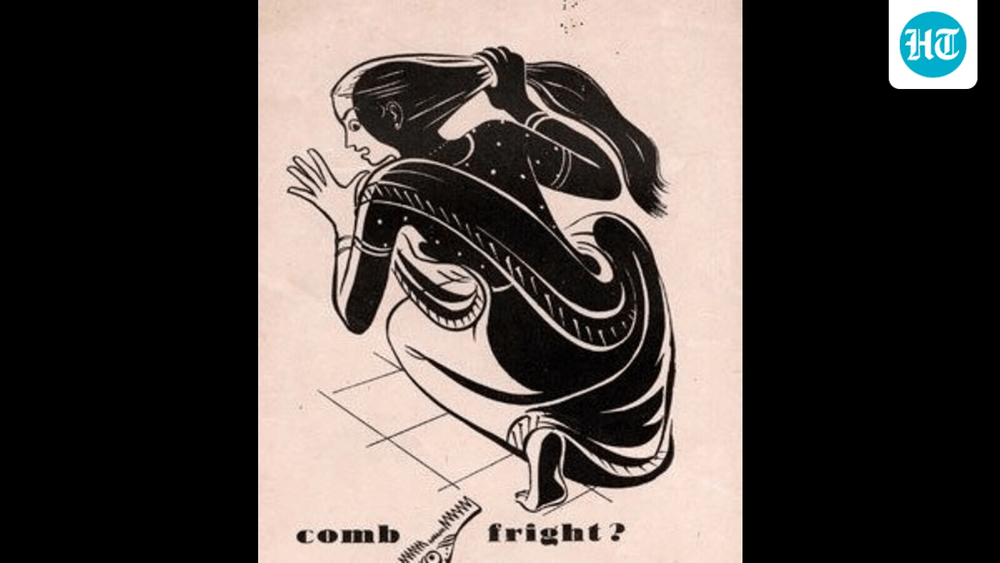
Ray’s advertising and graphic work demonstrates the importance of economical drawing, expressive lettering and a coherent visual idea. His book jackets and film posters are also significant design work, but should be identified as those formats rather than automatically classified as product advertisements. The Ray Society documents the 1949 Paludrine advertising series among his commercial work.
Sources: Satyajit Ray Society, The artist.Attribution caution: agency artwork was frequently collaborative and not always signed. Do not assign every image produced by an agency to its most famous employee. A proper credit can distinguish concept, copy, illustration, art direction, photography, production and client.
8. Independence, tea and public communication
Independence in 1947 changed the political setting in which businesses addressed the public. Indian enterprise, industrial development, health, savings and citizenship could all become subjects of persuasion. Commercial advertising continued alongside government information, publicity and social communication. These categories can share a visual language while serving different objectives.
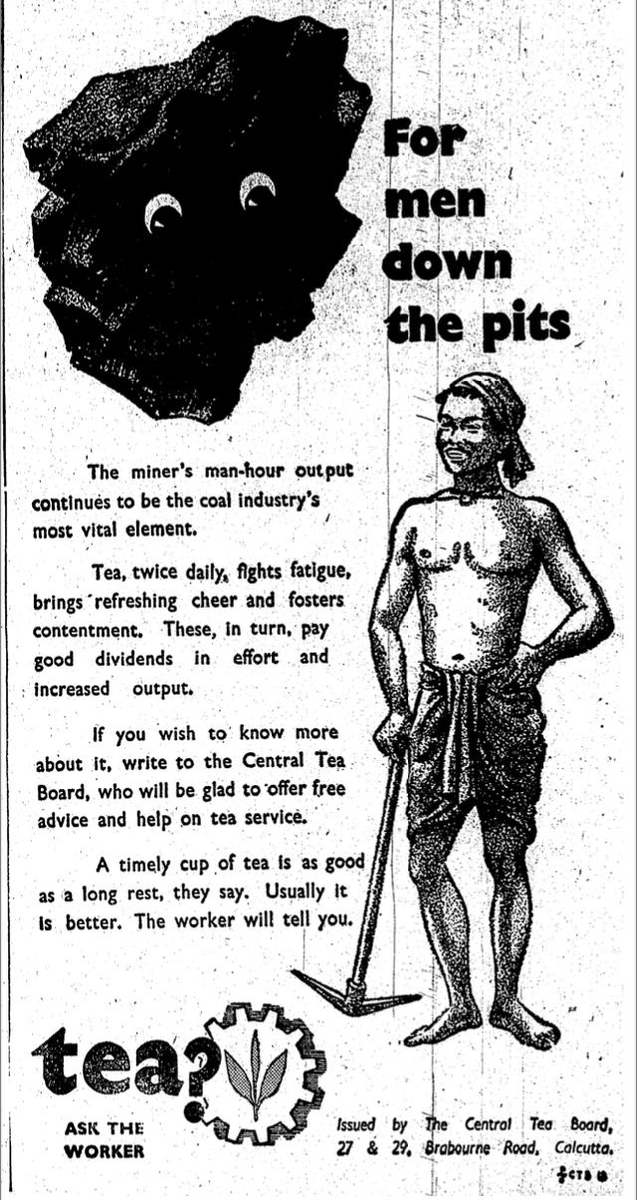
In this example the worker’s body, direct address and product image make tea part of the working day. Compare it with the spinning figure of 1947: one foregrounds national identity, the other everyday labour. Neither is simply a neutral illustration of how everyone lived.
The Directorate of Advertising and Visual Publicity became a separate attached office in 1955. Government publicity used posters, press, exhibitions and other media to reach different audiences. Today’s Central Bureau of Communication traces its integrated institutional organisation to the merger of publicity bodies in December 2017. These administrative developments should be distinguished from the much longer history of public announcements.
Sources: DAVP, history; Ministry of Information and Broadcasting, CBC.9. Air India: the Maharaja and international poster design
Air India’s Maharaja was created in 1946 through the collaboration of Bobby Kooka and artist Umesh Rao. The character became an adaptable brand personality: recognisable, theatrical and able to appear in different destinations and situations. The mascot’s origin should not be confused with the date or authorship of each later poster.
Sources: Air India, The Maharaja legacy.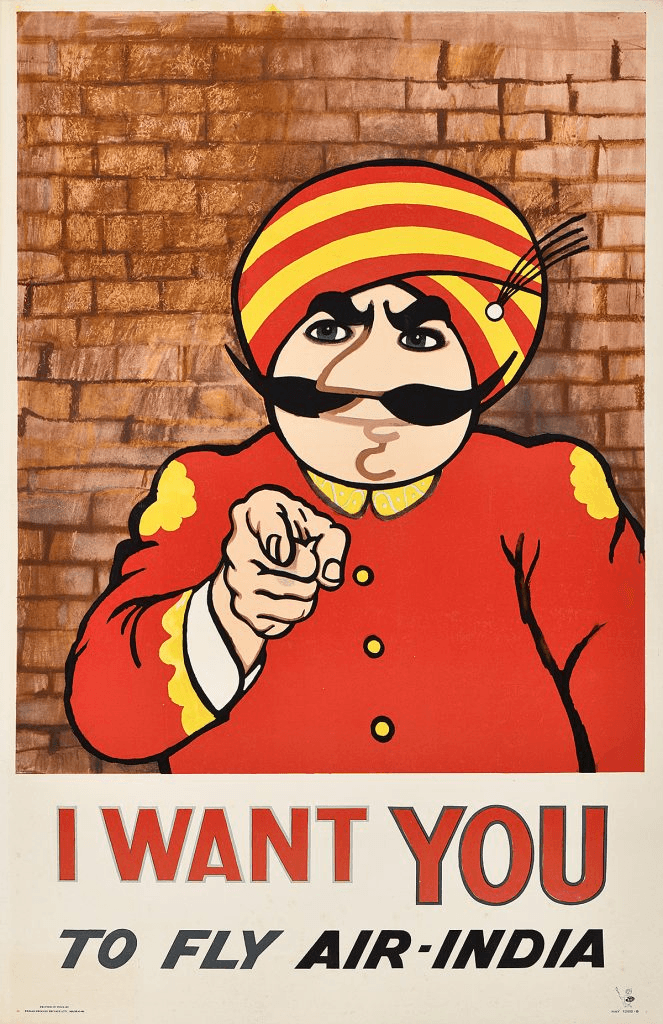
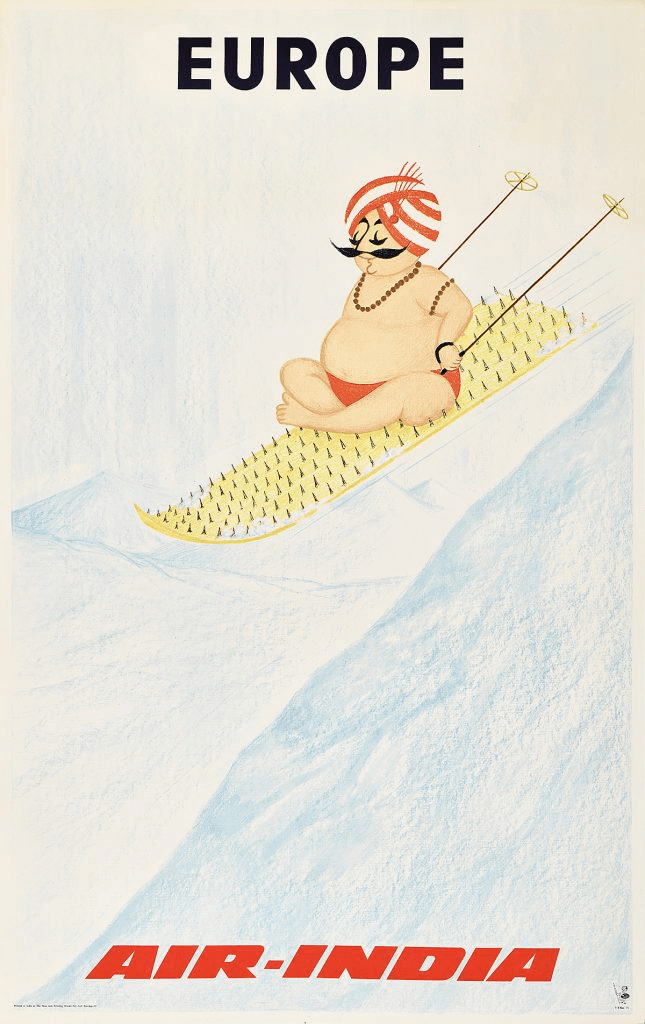
Read these posters through silhouette, colour, scale and surprise. A distinctive character reduces the amount of explanation needed, while the unexpected situation rewards a second look. The product being sold is travel, but the memorable element is often a comic image rather than a literal picture of an aircraft.
The campaign also invites critical reading. Humour, exoticism and national stereotypes are part of its historical vocabulary. Analyse what the image assumes about India and its international audience, rather than treating every representation as a timeless expression of Indian culture.
10. Gattu and the Amul Girl: how a mascot becomes a system
A mascot is a repeatable visual identity, not merely a decorative cartoon. It can connect advertisements across years and media. Repetition builds recognition; variation allows the character to respond to new products, social situations and events.
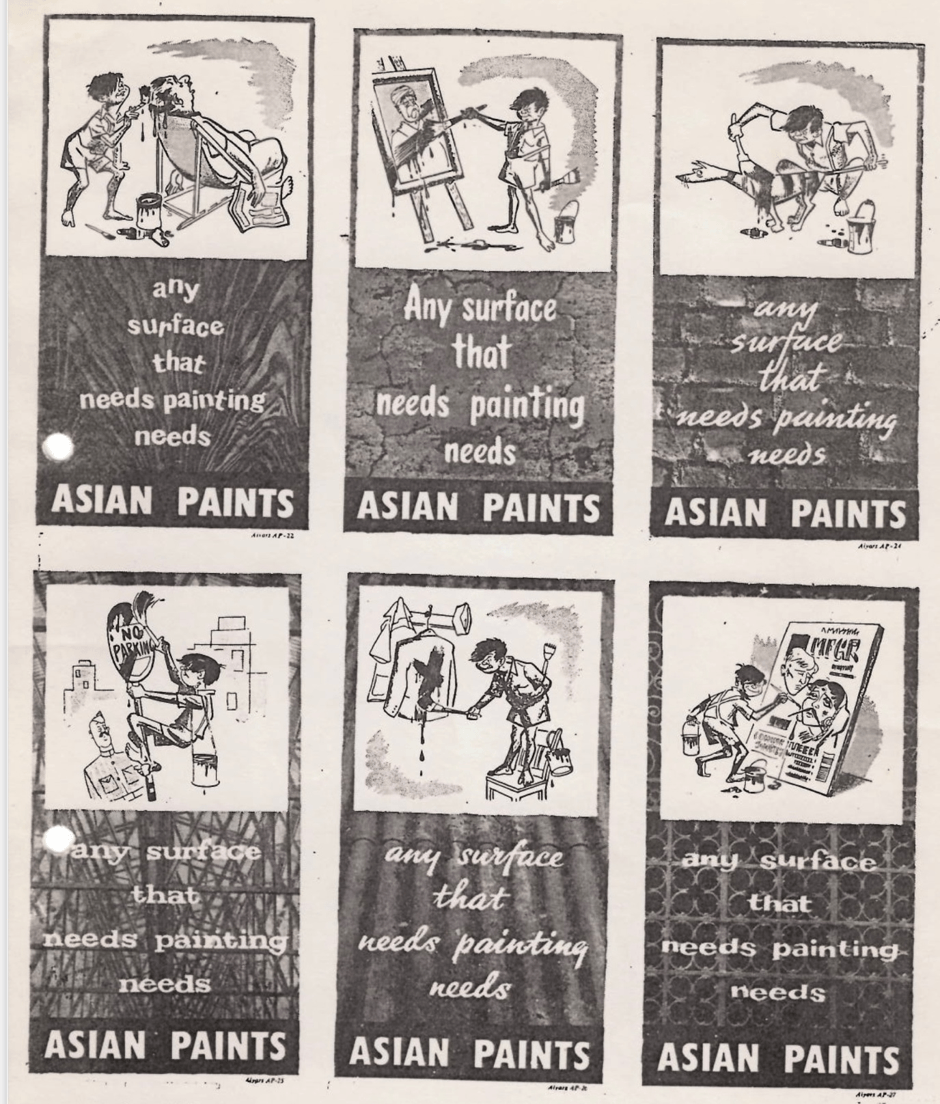
Asian Paints’ own historical documentation dates Gattu to 1954. The character helped give an industrial product a human, approachable face. Study the compact silhouette, facial expression and relation to the product message. A mascot can carry recognition even when the specific headline changes.
Sources: Asian Paints, Sustainability Report 2014–15.The Amul Girl dates to 1966. The early work involved Sylvester daCunha, illustrator Eustace Fernandes and copywriter Usha Katrak at Advertising and Sales Promotion, usually abbreviated ASP. Do not place the original 1966 creation at daCunha Associates, which was established later. Also distinguish Amul’s cooperative origin in 1946 from the mascot’s creation twenty years afterwards.
Sources: The Economic Times, Amul Girl turns 50, 2016.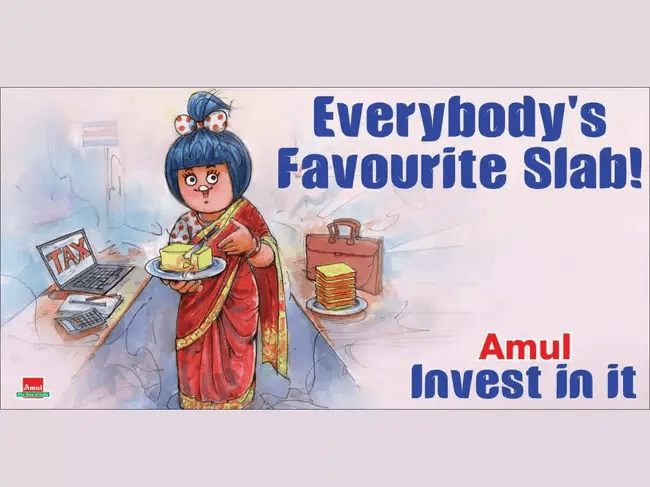
The educational value lies in the system: short copy, economical drawing, a familiar character and a rapid response to public conversation. A topical execution depends on its immediate context. Explain that context when using an old example in a classroom, because an allusion that was obvious then may be obscure now.
11. Radio: sponsored entertainment, jingles and the spoken brand
Radio changed advertising by making sound the primary design material. Voice, rhythm, music, repetition and silence could establish a brand without a visible package. A jingle could travel across households and remain in memory long after a short broadcast ended.
Binaca Geetmala began on Radio Ceylon in 1952, associated with presenter Ameen Sayani and sponsored by Binaca. It illustrates the commercial value of an entertainment programme attached to a brand. Its history must not be confused with the later introduction of commercials on All India Radio.
Sources: Isabel Huacuja Alonso, Songs by Ballot: Binaca Geetmala, 2022.Vividh Bharati launched on 3 October 1957. Commercial broadcasting on AIR began with a pilot on the Bombay–Poona–Nagpur service in November 1967. Therefore “radio advertising in India began in 1967” is too broad: brand-sponsored programmes reaching Indian listeners existed earlier through Radio Ceylon.
Sources: Prasar Bharati, Vividh Bharati; Rajya Sabha debate, commercial radio pilot, 1 August 1967.For analysis, identify the sonic signature, the spoken promise and the role of repetition. A radio script must remain intelligible without a visual explanation. Local accents and regional languages can create familiarity, while a tune or recurring voice provides continuity across separate messages.
12. Indian agency entrepreneurship, 1960s to 1980s
The growth of Indian agencies brought different creative cultures, regional strengths and client relationships into the industry. It was not a simple replacement of foreign agencies by Indian agencies. Independent firms, multinational networks, in-house departments, photographers and production houses worked alongside and competed with one another.
| Agency or institution | Milestone | People and relevance |
|---|---|---|
| Ulka | 1961 | Founded by Bal Mundkur; part of the growth of Indian-led agency enterprise. |
| MCM | 1965 | Founded by Kersy Katrak; known for a creative culture linking advertising, writing and visual experimentation. |
| Frank Simoes Associates | 1970 | Frank Simoes’s independent agency. Do not substitute 1968 for this agency’s founding. |
| Rediffusion | 1973 | Co-founded by Diwan Arun Nanda, Ajit Balakrishnan and Mohammed Khan. |
| Trikaya | 1977 | Associated with founder Ravi Gupta and a strong creative reputation. |
| Mudra | 25 March 1980 | Founded in Ahmedabad under A. G. Krishnamurthy; associated with Vimal, Rasna and Dhara. |
| MICA | 1991 | An education institution, not an agency; important to the professionalisation of communication training. |
Women were part of this institutional history as founders, managers, writers and artists. Tara Sinha was a major agency leader associated with Clarion and later Tara Sinha Associates. Nargis Wadia founded Interpub in the early 1960s; the agency’s own website dates its establishment to 1964. Their histories deserve a place alongside the better-known male creative figures. Avoid an unqualified claim that one of them was “India’s first woman agency founder” without defining the category and resolving conflicting accounts.
Sources: Rediff, Tara Sinha, 2019; The Economic Times, Indian advertising in the sixties, 2009; Inter Publicity, agency history.Agency entrepreneurship matters to Applied Art because it shaped the workplace: how ideas were commissioned, how art and copy collaborated, how clients assessed concepts and how regional work entered national campaigns. A creative style is influenced by those conditions as well as by individual talent.
13. Cinema, Doordarshan and the arrival of television advertising
Cinema halls gave advertisers access to a shared audience before television became a mass medium. Slides and advertising films could precede the main feature. The advertising film combined the visual decisions of print with performance, editing, sound and duration. Its history should not be reduced to a single disputed “first Indian ad film”.
Doordarshan began experimental television broadcasting in Delhi on 15 September 1959. Commercial television service began in January 1976. Doordarshan’s administrative separation from AIR followed in April 1976. These are three different milestones, rather than alternative dates for the same event.
Sources: DD News, 65 years of Doordarshan; Comptroller and Auditor General of India, Ministry of Information and Broadcasting report.Colour television and the national programme began on 15 August 1982; the Delhi Asian Games later that year accelerated public attention and adoption. The Asian Games were an important catalyst, not the first day television existed in India. Sponsored serials and shared household viewing subsequently created attractive settings for mass-market advertising.
A television commercial can establish a problem, dramatise a solution and deliver a pack shot in a few seconds. Music and dialogue make the message repeatable outside the screen. Print did not disappear: the same campaign could use a film, newspaper advertisement, shop display and outdoor poster, with each medium doing a different part of the work.
14. Nirma, Liril and Lalitaji: three different selling strategies
Detergent and soap advertising is central to Indian advertising history because it makes positioning visible. Products related to washing or bathing can be differentiated through economy, performance, freshness, aspiration or a distinctive character. Comparing the campaigns is more instructive than memorising slogans in isolation.
Nirma’s detergent business dates to 1969. Its later mass advertising and recognisable jingle helped establish an accessible brand identity. The product’s founding year is not automatically the date of a particular television commercial. Similarly, an agency’s association with one detergent should not be transferred to another: Nirma is not a Mudra campaign simply because Mudra is associated with other successful Indian consumer brands.
Sources: Nirma, detergents.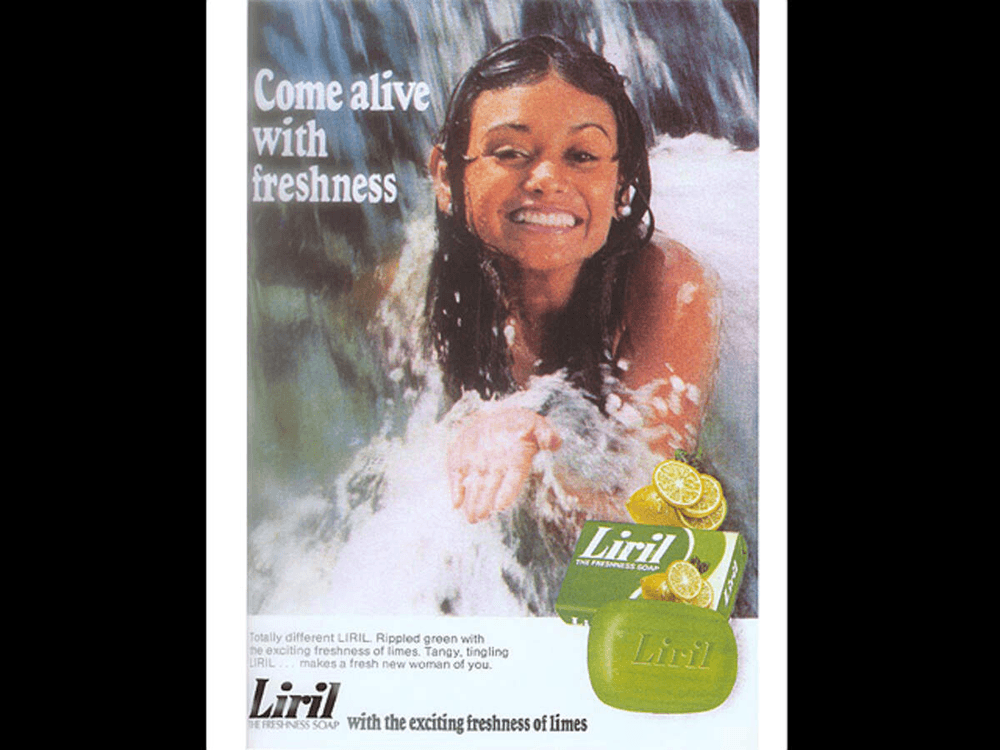
Liril, associated with Lintas and Alyque Padamsee, shifted attention from a literal cleansing demonstration towards a feeling of freshness and escape. The waterfall, body movement and green packaging create a connected sensory identity. In film, music and movement deepen that association; the print execution has to suggest the same experience within one frame.
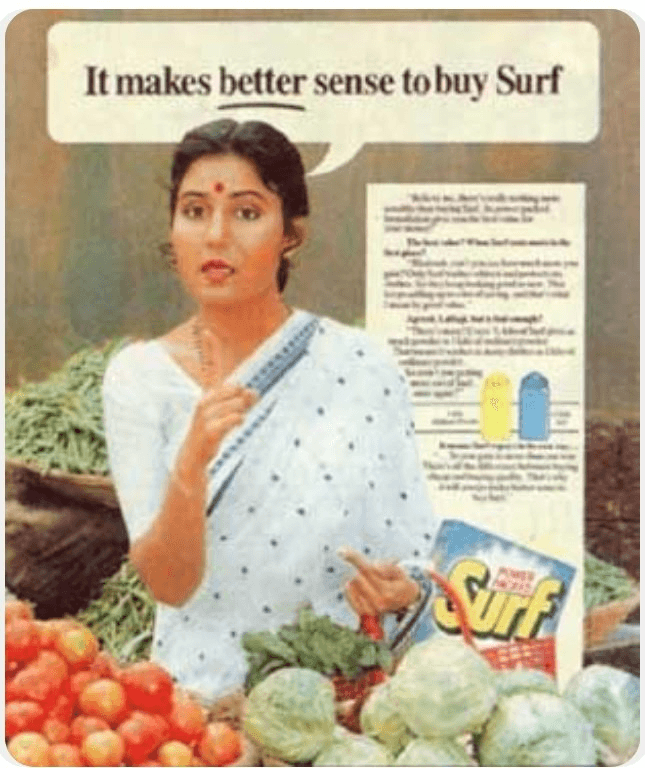
Lalitaji’s argument distinguishes a low purchase price from value in use. The character’s everyday shopping judgement supplies the logic: a seemingly cheaper purchase may not be the better choice. Read this as the advertiser’s positioning, not as an independently tested comparison of every competing detergent. The campaign also reveals how strongly household purchasing was coded as women’s work.
Sources: Mint, 70 years of Indian advertising.15. The 1980s: national brands, domestic aspiration and shared memory
Television encouraged brands to create recognisable families, recurring characters, catchphrases and songs. Vimal, Rasna, Dhara, Nirma, Surf and Bajaj are useful reference points, but they do not all belong to one agency or one creative team. Separate the client brand from the agency and the production company when preparing revision notes.

Hamara Bajaj connected a manufactured product to familiar Indian lives and a collective sense of belonging. The scooter could stand for mobility, family aspiration and continuity. Its strength lies in connecting the object to a social world rather than describing engine specifications alone.
Do not equate memorable advertising with a complete picture of society. Who is shown as the buyer, decision maker, worker or caregiver? Which regions and income groups are visible? Such questions help turn nostalgic recognition into historical analysis.
16. Liberalisation and the 1990s: cable television, competition and youth
The economic reforms of 1991 belong to a major change in India’s business environment. Greater competition, new products and changing consumer expectations expanded the demands placed on advertising. The reforms did not mark the first arrival of all multinational brands: the earlier brand table shows that several had operated in India for decades.
Sources: Reserve Bank of India, chronological history.Cable and satellite television multiplied channels and reduced dependence on a single national viewing schedule. Advertisers could address more specific audiences, while media planning became increasingly specialised. Youth culture, sport, cinema and urban lifestyles became prominent settings for competitive brand storytelling.
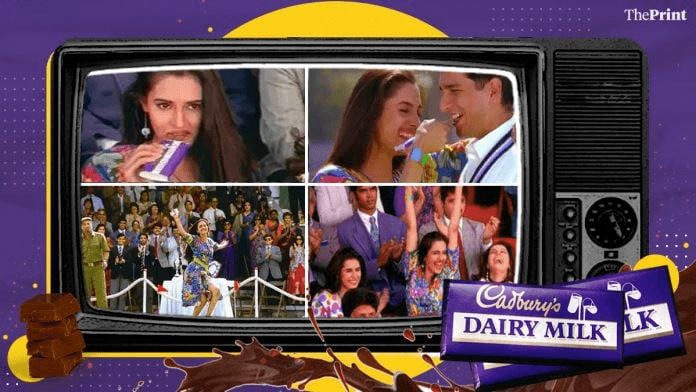
The Dairy Milk commercial made chocolate part of adult spontaneity and celebration. Its emotional centre is a person’s uninhibited response to a sporting moment. The product benefits from the feeling created by the narrative. This is a useful example of repositioning a familiar category through an unexpected user situation.
Pepsi’s 1996 World Cup campaign, Nothing Official About It, is associated with Anuja Chauhan at JWT. It illustrates how a brand can make wit and cultural conversation part of competitive positioning. Hinglish copy in this period should be understood as crafted communication with a particular audience, not as an absence of language strategy.
Sources: The One Club, Anuja Chauhan biography.17. The 2000s: visual humour, local idiom and memorable characters
Indian advertising in the 2000s frequently combined concise storytelling with local idiom, comic exaggeration and highly recognisable situations. A successful film could be discussed beyond its scheduled media placement. Yet the era also included rational product advertising, corporate communication and direct response; humour was one important route, not the only one.

The visual joke links a familiar situation to a product benefit through exaggeration. It is not a literal demonstration that glue was used on the passengers. For an exam answer, identify the product benefit, the metaphor and the role of the final brand reveal. The director’s treatment, casting, sound and timing help make the idea work as a film.
Sources: Corcoise Films, Prasoon Pandey showreel.Prasoon Joshi’s McCann work on Coca-Cola, including the 2002 Thanda Matlab Coca-Cola campaign, is a useful study in conversational language and character. The word thanda provided a broad everyday category that the brand sought to occupy. Do not confuse Joshi, the writer and creative leader, with director Prasoon Pandey.
Sources: Rediff, Prasoon Joshi profile, 2003.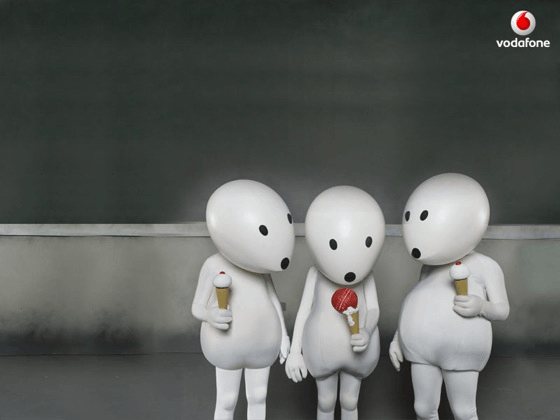
The ZooZoo work shows the value of a consistent character world across many short executions. Each situation can change while the visual identity remains recognisable. Avoid using a still as evidence of production technique unless the making-of record has also been checked: appearance alone cannot tell a viewer whether something is animation, costume or a hybrid.
18. Tourism, public health and public-interest advertising
The history of Indian advertising includes more than products sold for private consumption. Tourism promotion, public health, development communication and institutional publicity use many of the same tools: memorable identity, clear hierarchy, repetition, spokespersons and media planning. Their success should be evaluated against their own objectives rather than only sales.


The Incredible India campaign began in 2002. Its identity creates continuity across varied destinations and cultural subjects. The 2007 example demonstrates how a campaign can evolve while preserving a recognisable signature. Promotional archives establish what was produced, but do not by themselves prove that advertising alone caused a change in tourist arrivals.
Amitabh Bachchan’s work on polio communication provides a different kind of example. UNICEF distinguishes collaboration from 2002 and his formal appointment as a Goodwill Ambassador in April 2005. These dates should not be collapsed into a single appointment in 2002. A trusted voice and direct address can help a public message reach an audience, alongside the work of health services, communities and many other participants.
Sources: UNICEF India, Amitabh Bachchan.Political publicity also belongs to the wider history of persuasion: party symbols, candidate photographs, posters, slogans and later screen-based communication. It should be distinguished from commercial brand advertising and government public information. A campaign’s historical visibility is not evidence that its claims are correct.
19. Digital advertising: from the web to mobile and creators
Public internet access in the mid-1990s opened a new advertising environment, but the transition was gradual and uneven. Websites, banners and email were followed by search advertising, social platforms, online video and mobile applications. Older media continued to operate alongside them. A village wall, a television spot and a mobile advertisement can all belong to the same contemporary campaign.
The major conceptual change is that distribution can be targeted, measured and adjusted at much finer intervals. Search advertising can respond to an expressed query. Display and video can reach a selected audience. An online store can connect an advertisement to a transaction. Measurement remains a matter of interpretation: a view, click and purchase are different events, and none should automatically be treated as proof that the advertisement caused all the subsequent behaviour.
Creators introduced another relationship between personality, audience and brand. Their work can resemble ordinary recommendations while carrying a commercial arrangement. Native advertising creates a related issue when promotional material takes the form of editorial content. Historical study should therefore include disclosure and trust alongside format and technology.
For Applied Art, compare the changing canvas: a long newspaper page, a horizontal television frame, a vertical phone screen and a thumbnail each impose different constraints. Small-screen legibility, an early visual hook, captions and a clear next action become design decisions. “Digital” is a distribution environment, not one visual style.
20. ShareTheLoad and the changing representation of domestic work
Ariel’s ShareTheLoad campaign began in 2015, associated with BBDO India and Josy Paul’s team. It asks audiences to reconsider the unequal distribution of household work. The campaign is useful for comparing newer brand narratives with earlier detergent advertisements that positioned women as the primary guardians of household cleanliness.
Sources: Ariel, The ShareTheLoad journey; P&G India, gender equality partners and communities.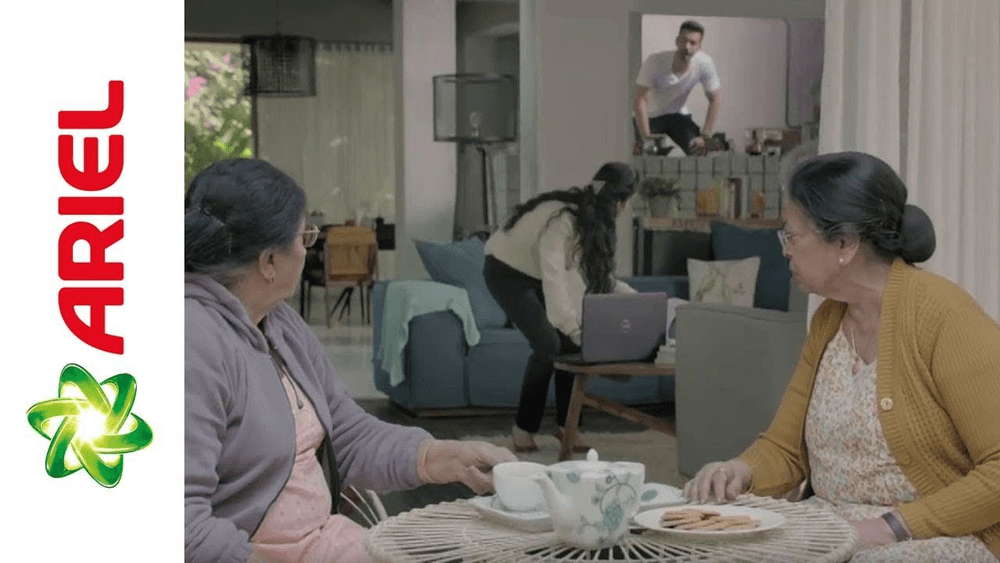
Compare the buyer role, domestic setting, dialogue and implied responsibility with Lalitaji. The product category remains similar while the social argument changes. This is an analytical comparison, not a claim that a single campaign eliminated inequality. Brand-reported impact and independently demonstrated social change are different kinds of evidence.
Ethical analysis also asks whether a campaign’s social message is consistent with its wider practices and whether it gives the represented audience agency. A historical guide should make space for such questions without assuming that all older work was identical or all contemporary work is progressive.
21. Personalisation and AI: Shah Rukh Khan My Ad, 2021
Cadbury’s Shah Rukh Khan My Ad extended a celebrity-led festive campaign into personalised advertisements for local businesses. The 2021 work brought together Ogilvy, Wavemaker and technology and production collaborators, including Rephrase.ai. It connected a national brand and celebrity with shop-specific names and local relevance.
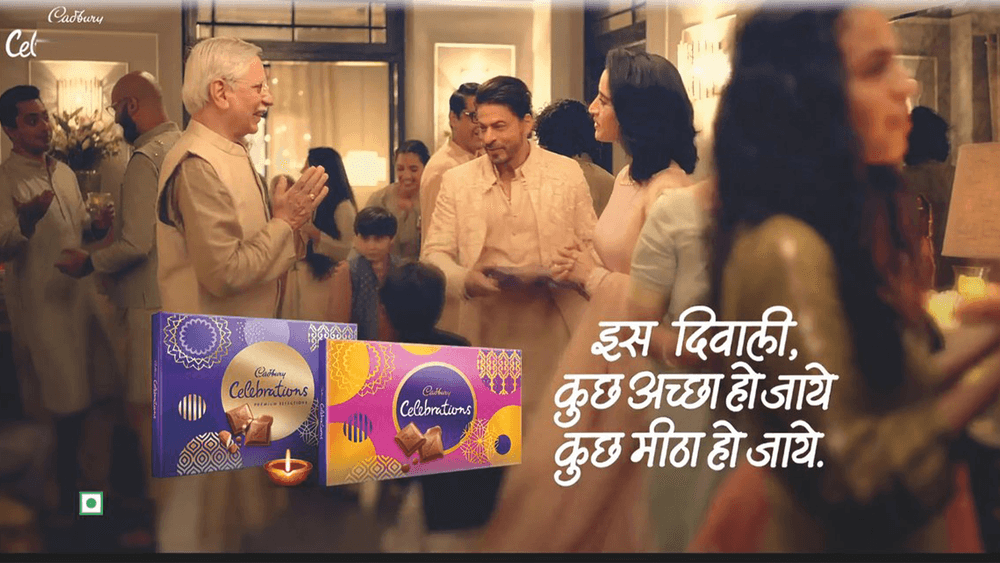
The design problem is no longer only how to make one persuasive advertisement. It is also how to maintain a consistent identity while producing many relevant versions. The campaign follows an earlier Not Just a Cadbury Ad initiative; do not date every part of that wider idea to the same year.
Sources: Ogilvy, Shah Rukh Khan My Ad.As of October 2026, automation, generative tools, retail media, connected television and creator-led promotion form part of the current advertising environment. The historical principles remain recognisable: identify the audience, make a credible proposition, create a memorable form and choose distribution deliberately. With synthetic media, consent, truthful representation and a clear distinction between authentic footage and generated material become essential questions.
22. The history beyond metropolitan agency archives
A national history becomes incomplete if it contains only English-language newspapers and famous television films. Regional-language copy, cinema slides, local cable spots, painted walls, bus panels, shop shutters, market displays, festival promotions and packaging have also shaped how people encounter brands. Many such objects were temporary and are poorly preserved.
A wall painting has a different relationship to place from a national magazine page. It can use a local landmark, a shopkeeper’s name or a familiar script. Rural demonstrations, fairs and mobile publicity connect persuasion to direct experience. Retail signs can combine manufacturer identity with the trust attached to a local seller.
Packaging deserves particular attention. A wrapper, tin, label or sachet identifies the product at the point of purchase and can circulate far beyond the location of a formal advertisement. Changes in pack size, price display, script and colour can reveal how a company imagined its audience. Packaging is not automatically a paid advertisement, but it is part of the broader visual history of branding.
Archive survival creates bias. A campaign preserved by a large company or international museum is easier to study than an unsigned local poster. Absence from a digital archive does not prove that a region, language or designer made no contribution. A responsible timeline states what the available evidence can support.
23. Indian advertising personalities: who did what?
Use this as a role-based revision list. “Ad guru” is an informal label, not a job description or evidence that one person created every part of a campaign. Campaigns are collaborative; credit a team when the archival record supports one.
| Person | Role and useful association |
|---|---|
| Annada Munshi | Art director and commercial artist; D. J. Keymer and Swadeshi-era visual communication. |
| Satyajit Ray | Visualiser, illustrator and designer before and alongside filmmaking; D. J. Keymer and Signet Press. |
| Bobby Kooka and Umesh Rao | The collaboration associated with the Maharaja’s origin in 1946. |
| S. N. Surti; Sheela “Charu” Gupte | Designers of individually credited Air India posters. Do not reduce the entire archive to the mascot’s original creators. |
| R. K. Laxman | Cartoonist and creator of Asian Paints’ Gattu. |
| Sylvester daCunha, Eustace Fernandes and Usha Katrak | Creative, illustration and copy contributions to the early Amul Girl campaign. |
| Alyque Padamsee | Creative and agency leader at Lintas; associated with Liril and Lalitaji. |
| Kersy Katrak; Frank Simoes | Writers and independent agency builders central to creative agency culture. |
| Tara Sinha; Nargis Wadia | Pioneering women agency leaders and entrepreneurs. |
| Subhas Ghosal; Subroto Sengupta; Mani Ayer | Agency leadership, professional practice and industry development. |
| Diwan Arun Nanda, Ajit Balakrishnan and Mohammed Khan | Rediffusion co-founders; distinct later careers and agency contributions. |
| A. G. Krishnamurthy | Mudra founder and an important figure in communication education through MICA. |
| Piyush Pandey | Ogilvy creative leader; associated with Indian-language storytelling and campaigns including Cadbury and Fevicol. |
| Anuja Chauhan | Writer and JWT creative leader; associated with Pepsi campaigns and memorable conversational copy. |
| Prasoon Joshi | Writer and McCann creative leader; Coca-Cola is a major reference. |
| Prasoon Pandey | Advertising film director; Fevicol Bus is a useful reference. |
| Josy Paul | BBDO India creative leader; ShareTheLoad is a major reference. |
Do not confuse the client, agency and execution team. A brand owns the advertised product; the agency develops and coordinates communication; a production house may make the film; an illustrator or photographer creates particular visual material. A celebrity appearing in an advertisement is not necessarily its writer or creative director.
24. Indian advertising history timeline: quick revision
| Period / year | Milestone | Remember the distinction |
|---|---|---|
| Before mass print | Signs, market display and spoken selling | Predecessors; no proven single ancient first. |
| 1777–1779 | Surviving Hicky-printed sales handbill in Bengal | A dated range, not an exact first-advertisement year. |
| 1780 | Hicky’s Bengal Gazette launches, 29 January | First printed newspaper milestone. |
| 1888 / 1895 | Sunlight / Lifebuoy Indian market milestones | Separate brands and entry histories. |
| 1894 | Ravi Varma Press established | Image reproduction, not the first advertisement. |
| c. 1905 | Commonly cited B. Dattaram agency date | Founding and first-agency claims need qualification. |
| 1912 / 1961 | Nestlé trading presence / Moga factory | Entry differs from local manufacturing. |
| 1922 | Godrej’s Tagore endorsement milestone | Not the founding of all Indian soap advertising. |
| 1929 | JWT opens Bombay office | Later agency names should not be backdated. |
| 1931 / 1932 | Bata India incorporation / initial operation | Legal formation differs from manufacturing start. |
| 1939 | Lintas Indian operation | International origin is earlier. |
| 1943 | Ray joins D. J. Keymer | Advertising precedes his first feature film. |
| 1945 | AAAI founded | Industry association. |
| 1946 | Air India Maharaja created | Later posters have different artists and dates. |
| 1947 | Independence; Swadeshi tea example | National context and product persuasion intersect. |
| 1948 | Cadbury begins Indian operations | Separate from the global brand’s origin. |
| 1952 | Binaca Geetmala on Radio Ceylon | Sponsored radio before AIR commercial service. |
| 1954 | Gattu created | Individual executions can be later. |
| 1955 | DAVP separate attached office | Government publicity institution. |
| 1957 | Vividh Bharati launches | Commercial AIR pilot follows in 1967. |
| 1959 | Experimental television in Delhi | Not yet nationwide commercial colour TV. |
| 1965 / 1966 | MCM founded / Amul Girl created | Agency and mascot are different milestones. |
| 1967 | AIR commercial pilot | Not the first sponsored radio heard in India. |
| 1969 | Nirma detergent origin | Not necessarily the famous TV jingle’s year. |
| 1973 | Rediffusion founded | An Indian agency entrepreneurship milestone. |
| Mid-1970s | Liril’s famous campaign period | Product and film dates differ in accounts. |
| 1976 | Doordarshan commercial service | Experimental TV began in 1959. |
| 1980 | Mudra founded | Ahmedabad-based agency enterprise. |
| 1982 | Colour TV and national programme | Asian Games accelerate attention and adoption. |
| 1984 / 1985 | Lalitaji campaign / ASCI established | A creative milestone and a regulatory institution. |
| 1989 | Hamara Bajaj | National belonging through brand storytelling. |
| 1991 | Economic reforms; MICA founded | Business change and education development. |
| 1994 / 1996 | Cadbury cricket / Pepsi World Cup campaign | Emotion and competitive cultural wit. |
| 2002 | Fevicol Bus; Thanda Matlab Coca-Cola; Incredible India | Different teams and communication objectives. |
| 2009 | Vodafone ZooZoo campaign | A repeated character world. |
| 2015 | Ariel ShareTheLoad begins | Continuing series, not one isolated execution. |
| 2021 | Shah Rukh Khan My Ad; ASCI influencer guidelines | Personalisation and disclosure develop together. |
The dates above are drawn from the linked discussion and source list. Where founding or release accounts conflict, the entry deliberately uses a range or qualification.
25. Self-regulation, evidence and the responsibility of the designer
The Advertising Standards Council of India was established in 1985 as a self-regulatory body. It is not a government advertising agency. Its official milestones include influencer advertising guidelines in 2021, guidance addressing harmful gender stereotypes in 2022 and environmental-claim guidance in 2024.
Sources: ASCI, history and key milestones.For historical analysis, separate what an advertisement says from what the historian can verify. A testimonial is evidence that an endorsement was presented, not automatic proof of product efficacy. A company’s anniversary page is useful for its institutional history, but it can omit unsuccessful work or competing perspectives. A museum catalogue can establish an object’s attribution while leaving its reception uncertain.
Sources also preserve different dates: concept development, filming, first release, re-release, archive accession and an award can each occur in a different year. State which event a date describes. If a surviving execution is undated, identify its campaign context without inventing an exact publication year.
When reproducing historical advertisements, retain the original content and credit its source. Do not remove a watermark or present a digitally invented poster as an archival object. These images are included at study resolution for commentary; their presence does not imply that their owners endorse ashacademy or that they are freely licensed for other commercial uses.
26. How to study any historical advertisement for Applied Art
| Question | What to observe |
|---|---|
| Who is speaking, and to whom? | Client, product category, intended audience, language and media setting. |
| What is the proposition? | Availability, price, performance, emotion, social identity or behaviour change. |
| What creates hierarchy? | Headline size, image placement, contrast, white space and reading order. |
| How do words and images interact? | Repetition, explanation, irony, metaphor or an unexpected combination. |
| What makes the brand recognisable? | Logo, pack, colour, mascot, recurring character, voice or tune. |
| What does the medium contribute? | Print permanence, outdoor scale, radio sound, film time or digital interaction. |
| What does it assume about society? | Gender, class, region, race, nation, aspiration and purchasing power. |
| What is actually documented? | Date, authorship, archive provenance and the difference between claims and evidence. |
A short exam paragraph can follow this order: identify the object, place it in its period, describe the visual or verbal strategy, explain the product link, and note its wider cultural significance. Describe what is visible before offering interpretation. Avoid substituting a list of famous slogans for an analysis of design.
27. Common confusions to avoid
| Oversimplified claim | More accurate wording |
|---|---|
| “The first Indian advertisement was in 1780.” | 1780 is the newspaper milestone; a surviving Hicky handbill is dated 1777–1779. Neither settles every possible first-advertisement claim. |
| “All major international brands entered after 1991.” | Several entered much earlier; reforms changed the business environment rather than creating every first entry. |
| “Amul began in 1966.” | The mascot dates to 1966; the cooperative’s origin is 1946. |
| “Commercial radio began with Vividh Bharati in 1957.” | Vividh Bharati launched in 1957; AIR’s commercial pilot began in 1967; Radio Ceylon sponsorship was earlier. |
| “Indian television started in 1982.” | Experimental Delhi service began in 1959; commercials in 1976; colour and national programming in 1982. |
| “Every Maharaja poster is by Umesh Rao.” | He is associated with the mascot’s origin; later posters have separately credited designers. |
| “Prasoon Joshi directed Fevicol Bus.” | Prasoon Pandey is the director; Joshi is a different advertising professional. |
| “A campaign’s award year is its launch year.” | Check release evidence; awards and case studies often appear later. |
| “Applied Art is Unit III of the common syllabus.” | Use the common Unit VIII context and the separately named Elective III: Applied Art. |
28. Original revision prompts
These are practice prompts written for this guide, not claimed previous-year questions.
- Explain why the history of advertising in India cannot be assigned a single uncontested beginning.
- Distinguish a commercial handbill, a newspaper advertisement, packaging and a calendar advertisement.
- Compare national identity in Godrej or Swadeshi tea publicity with glamour in a Lux advertisement.
- Discuss the contribution of commercial artists using Annada Munshi and Satyajit Ray.
- Analyse how the Maharaja, Gattu and the Amul Girl function as repeatable brand identities.
- Distinguish Radio Ceylon sponsorship from the introduction of AIR commercial broadcasting.
- Compare Liril’s emotional positioning with Lalitaji’s argument about value.
- Explain how liberalisation and satellite television changed advertising opportunities in the 1990s.
- Analyse visual metaphor in Fevicol Bus and personalisation in Shah Rukh Khan My Ad.
- Discuss the roles of regional-language advertising, gender representation and source criticism in writing this history.
29. Frequently asked questions
When did advertising start in India?
There is no single date covering every form. Trade communication predates mass print. A surviving Hicky-printed handbill is dated 1777–1779, while Hicky’s Bengal Gazette began on 29 January 1780 as India’s first printed newspaper.
Which was India’s first advertising agency?
B. Dattaram & Co. is commonly cited in advertising histories with a founding date of 1905 and an oldest-agency claim. Other accounts vary, and the answer depends on how an agency is defined. State the source and qualify a first-ever claim.
Who are important figures in Indian advertising history?
Study artists such as Annada Munshi, Satyajit Ray and R. K. Laxman; agency leaders including Alyque Padamsee, Tara Sinha and A. G. Krishnamurthy; and later creative figures including Piyush Pandey, Anuja Chauhan, Prasoon Joshi and Josy Paul. Campaigns also depend on less-publicised collaborators.
When did television advertising begin in India?
Doordarshan’s commercial service began in January 1976. Experimental television began in Delhi in September 1959; colour and national programming followed in August 1982.
How should I study this topic for UGC NET Visual Arts?
Connect chronology to visual analysis: identify the campaign, medium, proposition, credited team and design strategy. The topic relates to common Unit VIII and to Elective III: Applied Art. Do not rely only on a list of slogans.
Are the images original archival advertisements?
The guide uses sourced historical advertisements, posters, campaign stills and clearly identified editorial reproductions. Captions distinguish them. A later still or composite is not presented as the first original execution.
30. Sources, image credits and further study
Prepared from institutional collections, company archives, scholarly writing and identified campaign histories. Sources document different things: an object, a corporate milestone, a recollection or an interpretation. Linked captions provide image provenance; historical claims in a reproduced advertisement are not endorsed. Research checked 27 October 2026. This is a selective, substantial national overview, not an inventory of every local agency or advertisement.
- SOAS Library, The first printed works of Bengal
- Jagran, reproduction of Bengal Gazette page
- Hicky’s Bengal Gazette, University of Pennsylvania Libraries catalogue
- The Metropolitan Museum of Art, Lakshmi, Ravi Varma Press, 1894
- Ganesh Shivaswamy Foundation, The influence of the Ravi Varma Press
- Hindustan Unilever, investor presentation, 23 February 2021
- Nestlé India, Nestlé in India
- Bata India, About us
- Mondelēz International, India
- Hindustan Unilever, company history
- Heidelberg University Library, Lux advertisement, Times of India Annual 1937
- Godrej Industries, Our story
- Godrej Archives, July–August 2006
- IIAD, The Journey of Illustrations in Indian Advertising
- Duke University Libraries, J. Walter Thompson research guide
- TBWA India, agency history and thoughts
- History of Advertising Trust, Ogilvy agency history
- Advertising Agencies Association of India, History
- Pinaki De, An ad-mi-Ray-ble vision, Firstpost, 2021
- Satyajit Ray Society, biography
- Philip Lutgendorf, Chai Why? The Triumph of Tea in India, Tasveer Ghar
- Hindustan Times / MAP Academy, Ray’s advertising work, 2026
- Satyajit Ray Society, The artist
- Natasha Nongbri, Advertising Tea in the New Nation, Critical Collective, 2024
- DAVP, history
- Ministry of Information and Broadcasting, CBC
- Air India, The Maharaja legacy
- Poster House, Air-India’s Maharaja: Advertising Gone Rogue
- ET BrandEquity, Asian Paints’ Gattu
- Asian Paints, Sustainability Report 2014–15
- The Economic Times, Amul Girl turns 50, 2016
- Amul, topical archive, Budget 2023
- Isabel Huacuja Alonso, Songs by Ballot: Binaca Geetmala, 2022
- Prasar Bharati, Vividh Bharati
- Rajya Sabha debate, commercial radio pilot, 1 August 1967
- AAAI, industry achievers
- University of Chicago, William Mazzarella’s research on MCM
- IIM Ahmedabad, tribute to Diwan Arun Nanda
- The Economic Times, A. G. Krishnamurthy, Mudra and MICA
- MICA, Annual Report 2023–24
- FCB Ulka, 60th anniversary company press release, 2021
- Sucheta Dalal, Frank Simoes: An advertising legend and a self-made man, 2002
- Rediff, Tara Sinha, 2019
- The Economic Times, Indian advertising in the sixties, 2009
- Inter Publicity, agency history
- DD News, 65 years of Doordarshan
- Comptroller and Auditor General of India, Ministry of Information and Broadcasting report
- Nirma, detergents
- ET BrandEquity, The iconic Liril ad, 2015
- Adglitz, classic Indian advertisements, 2010
- Mint, 70 years of Indian advertising
- Bajaj Auto, 80 years of Bajaj Auto
- Reserve Bank of India, chronological history
- ThePrint, Cadbury’s cricket commercial, 2021
- The One Club, Anuja Chauhan biography
- Ogilvy, 75 years of iconic campaigns
- Corcoise Films, Prasoon Pandey showreel
- Rediff, Prasoon Joshi profile, 2003
- Bhatnaturally, Vodafone ZooZoo ads for IPL 2009
- Incredible India campaign archive
- UNICEF India, Amitabh Bachchan
- Ariel, The ShareTheLoad journey
- P&G India, gender equality partners and communities
- WPP, Ogilvy and Wavemaker: NotJustACadburyAd
- Ogilvy, Shah Rukh Khan My Ad
- ASCI, history and key milestones

You may also like
Fauvism: History, Characteristics, Artists and Important Artworks
Symbolism in Art: History, Characteristics, Artists and Artworks