Best Books for UGC NET Visual Arts 2026: What to Read and How to Use Them
The best books for UGC NET Visual Arts are the ones you can connect to the syllabus, understand visually, and revise through previous-year questions. A useful starting combination is Edith Tomory for a broad foundation, one Western art survey such as Laurie Schneider Adams, and Pran Nath Mago for modern Indian art. Add specialist references where your preparation needs more depth.
Selected with guidance from Samraath, founder of ashacademy and a UGC NET JRF-qualified Visual Arts educator, this reading list explains what each book can contribute to your preparation. The recommendations are independent educational guidance, not an official UGC book list.
You do not need to buy or read all nine books from cover to cover. Choose a manageable core, use the official syllabus as a checklist, and study artworks alongside the text.
On this page: books, reading plan and FAQs
Quick comparison: which UGC NET Visual Arts book should you choose?
| Book | Best use | Reading priority |
|---|---|---|
| A History of Fine Arts in India and the West, Edith Tomory | Broad Indian and Western art foundation | Foundation option |
| The Annotated Mona Lisa, Carol Strickland with John Boswell | Accessible orientation and quick Western art revision | Introductory companion |
| A History of Western Art, Laurie Schneider Adams | Structured Western art history reading | Main Western survey option |
| Janson’s History of Art: The Western Tradition | Detailed Western art reference and visual analysis | Alternative survey or selective reference |
| Contemporary Art in India: A Perspective, Pran Nath Mago | Modern Indian art and its development | Focused Indian modernism reference |
| Indian Art & Culture, Nitin Singhania | Broad cultural overview and selective factual revision | Supplement |
| Indian Art: A Concise History, Roy C. Craven | Chronological Indian art history | Indian art survey option |
| Art Theory: A Very Short Introduction, Cynthia Freeland | Understanding questions about art and interpretation | Conceptual companion |
| The Complete Printmaker, John Ross, Clare Romano and Tim Ross | Printmaking processes and technical distinctions | Specialist reference |
1. A History of Fine Arts in India and the West, Edith Tomory

Best for: students who need a broad framework before moving into detailed art history.
Tomory brings Indian and Western material together in one volume. Use it to establish the order of major periods, recognise important monuments and artworks, and connect artistic developments with historical settings.
What to study: select the sections corresponding to your syllabus checklist. Prepare separate timelines for Indian and Western art, then add representative works and stylistic characteristics. Compare the illustrations with your notes rather than memorising names without images.
How to use it: treat it as a foundation text. For a topic that needs greater depth, move to a focused reference rather than repeatedly rereading the entire survey.
Limitation: a longstanding survey cannot provide a fully current account of twenty-first-century practice. Supplement recent developments with reliable museum and institutional resources.
2. The Annotated Mona Lisa, Carol Strickland with John Boswell
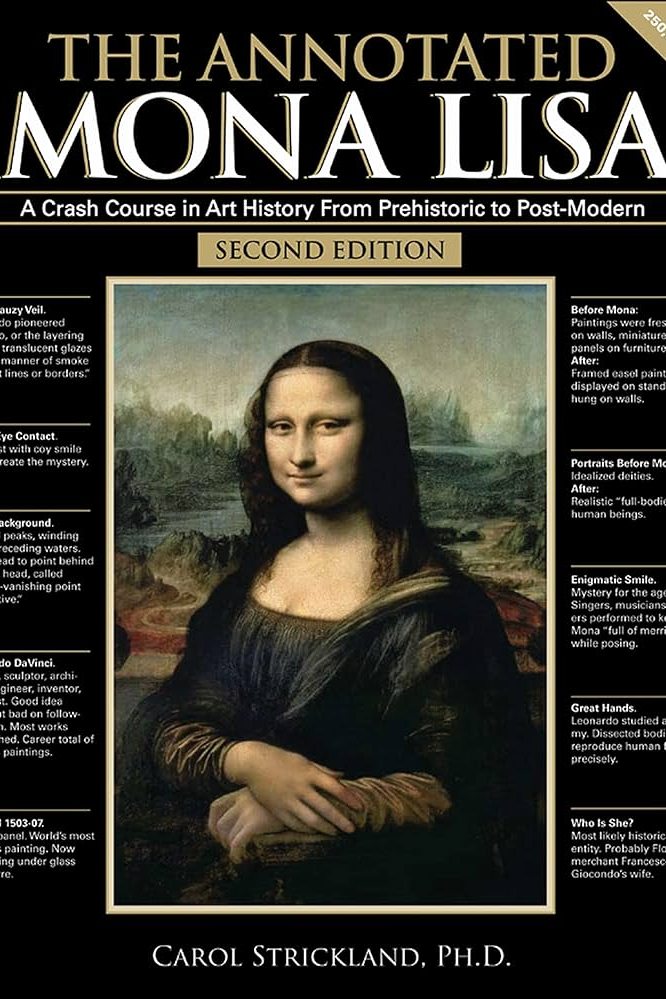
Best for: beginners who find long art history textbooks difficult to enter.
This illustrated introduction can help you organise Western art into understandable periods and movements. Its concise format makes it useful before a detailed lecture or during a first round of revision.
What to study: the sequence of movements, differences in visual style, major artists and representative works. Make small comparison sheets for adjacent movements instead of copying lengthy summaries.
How to use it: read a short overview first, examine the artworks, then consult your main survey for context and detail.
Limitation: it is an introductory companion, not a complete preparation source for Indian art, aesthetics, materials or the entire Visual Arts syllabus. Pagination varies between editions.
3. A History of Western Art, Laurie Schneider Adams
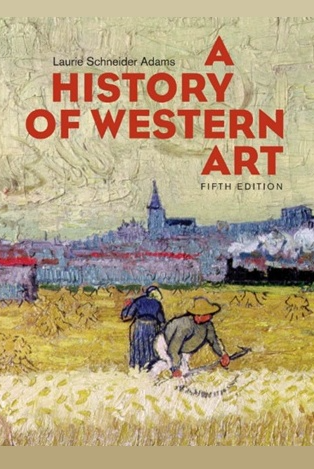
Best for: building a structured account of Western art history.
Adams is a useful main survey option for students who want to move beyond short movement summaries. Read works of painting, sculpture and architecture together with their historical settings.
What to study: the periods in your syllabus, their major formal changes, artists, works and relationships with patronage or religious and social contexts. For each movement, make notes under five headings: chronology, visual characteristics, artists, works and context.
How to use it: choose this as your principal Western survey if its style suits you. Use shorter summaries for revision and a second reference only when a question remains unresolved.
Limitation: studying a Western survey alone leaves substantial parts of the Visual Arts syllabus uncovered. This guide refers to the fifth edition.
4. Janson’s History of Art: The Western Tradition
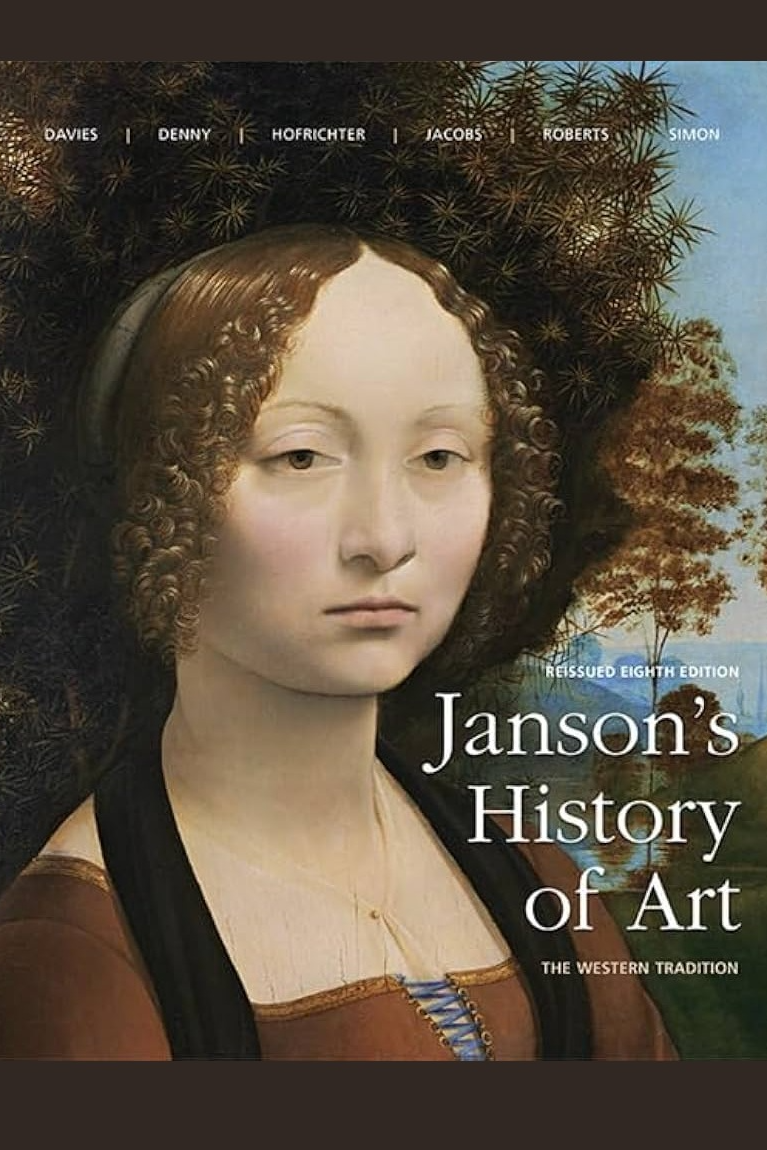
Best for: detailed reference work and closer visual analysis.
The reissued eighth edition is a multi-author revision of the Janson tradition. It should not be attributed solely to H. W. Janson. Pearson lists Penelope J. E. Davies and other contributing authors for this edition.
What to study: consult relevant periods when your primary survey leaves gaps. Compare artworks through composition, material, manufacture, style and historical function. The publisher’s contents include ancient Near Eastern art as well as the major periods of Western art.
How to use it: use it as an alternative main survey or a selective reference alongside Adams. Reading both entire books in parallel can create unnecessary repetition.
Limitation: its length makes selective reading important, particularly close to an examination.
5. Contemporary Art in India: A Perspective, Pran Nath Mago

Best for: understanding the development of modern Indian art.
Mago is a focused addition to a preparation list that otherwise relies heavily on ancient Indian art or Western movements. Read it to connect artists, artistic groups and changing approaches to Indian modernism.
What to study: build artist and group profiles from the relevant sections. Record stylistic concerns, institutional connections, representative works and historical circumstances. Check dates and spellings against reliable institutional records where needed.
How to use it: read alongside your modern Indian art lectures and solve authentic PYQs after each topic. Add an explanation for each answer, not just a name to memorise.
Limitation: its historical scope does not make it a complete account of all recent contemporary practice. NBT also lists a Hindi version, useful for readers seeking Hindi-medium support.
6. Indian Art & Culture, Nitin Singhania
Best for: selective cultural revision and an accessible broad overview.
This book is designed primarily for civil services and related competitive examinations. Its coverage can support introductory revision of Indian architecture, painting and crafts, but its purpose differs from a specialist Visual Arts textbook.
What to study: choose the visual art and cultural topics that match your checklist. Use compact notes to organise terminology and factual information, then return to specialist art history references for closer analysis.
How to use it: as a supplement after you have understood a topic, rather than as your only source.
Limitation: it cannot replace detailed study of artists, artworks, aesthetics, technical processes or Western art. This guide refers to the third edition. Check the edition when selecting your copy.
7. Indian Art: A Concise History, Roy C. Craven
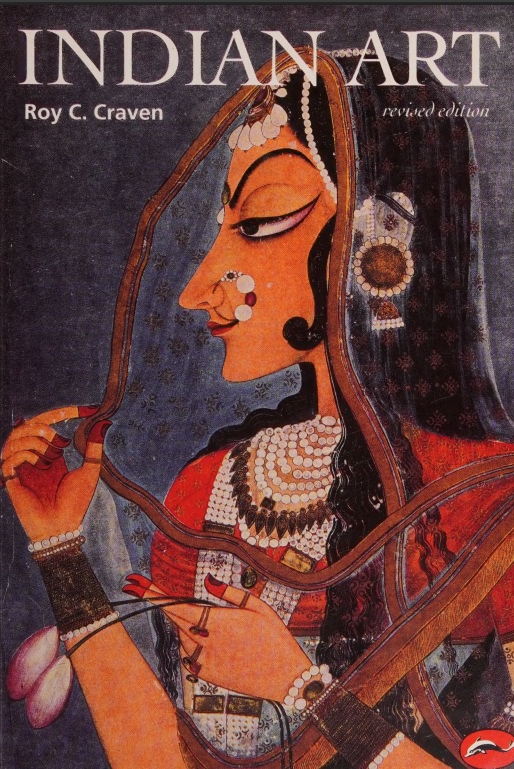
Best for: establishing a chronological Indian art history framework.
This supplementary selection can help connect architecture, sculpture and painting across major historical periods. It offers an Indian art survey to balance the Western survey books in this guide.
What to study: use relevant sections to organise major sites, artistic traditions and historical developments. Build a table linking period, region, monument or work, medium and distinguishing features.
How to use it: choose it as an Indian art survey option and use focused references for topics that require greater depth. The revised edition is associated with ISBN 9780500203026; older editions have different bibliographic details.
Limitation: a concise survey remains selective. Add focused reading for iconography, regional traditions and more recent scholarship.
8. Art Theory: A Very Short Introduction, Cynthia Freeland
Best for: developing conceptual confidence about art, interpretation and aesthetic questions.
Freeland introduces questions about what counts as art and how culture, institutions and interpretation affect its meaning. This is useful preparation for thinking through concepts rather than memorising disconnected definitions.
What to study: read an argument, identify the question it answers, and connect it to a specific artwork or example. Keep a glossary of terms and write brief explanations in your own words.
How to use it: as a conceptual companion to a more systematic study of Indian and Western aesthetics.
Limitation: this short introduction does not supply a complete history of Indian aesthetic theories or comprehensive coverage of every thinker named in your course material.
9. The Complete Printmaker, John Ross, Clare Romano and Tim Ross

Best for: students who confuse printmaking processes and technical vocabulary.
The revised and expanded reference discusses a range of printmaking methods, including relief, intaglio, lithography and screen printing. It can help you understand how a process works, rather than learning only its definition.
What to study: prepare a comparison table with matrix, tools, working sequence, inking method, printing method and visual effects. Use diagrams and practical demonstrations where available.
How to use it: consult the relevant process after a lecture or practice question. Compare related methods carefully, including etching and engraving.
Limitation: it is a specialist reference, not an all-in-one NET guide. It is also a historical technical text; contemporary workshop safety and equipment instructions need current guidance.
How these books connect to the official syllabus
The following is a reading map, not a claim that the list covers the complete syllabus. The official document contains the ten-unit scheme and further discipline-specific content; read the full document when planning preparation.
| Syllabus area | Relevant starting points | Further work needed |
|---|---|---|
| Unit III: traditional media, materials and techniques | The Complete Printmaker for print processes | Painting, sculpture and other processes need additional sources |
| Unit IV: modern processes and contemporary techniques | Selected technical references | Current digital and multimedia practices need separate study |
| Unit V: Indian and Western aesthetics | Freeland as a conceptual introduction | Systematic Indian and Western aesthetic theories |
| Unit VI: Western art history | Adams or Janson; Strickland for orientation | Detailed syllabus checklist and visual revision |
| Unit VII: Indian art through the nineteenth century | Tomory and Craven | Specialist regional and iconographic references |
| Unit VIII: modern and contemporary Indian practices | Mago | Advertising, design, art education and recent practices |
| Units I, II, IX and X | Selected material may offer context | Dedicated reading for fundamentals, interrelationships, Asian art, and folk, tribal and craft practices |
Read the official UGC Visual Arts syllabus
A practical reading plan for beginners
Start with the syllabus. Mark what you understand and what needs work. Use ashacademy’s syllabus explanation and free decoded PDF as a reading companion. The decoded guide is an independent educational resource, separate from the official syllabus.
Choose your core. A workable combination is Tomory or Craven for an Indian art framework, Adams or Janson for Western art, and Mago for modern Indian art. Use The Annotated Mona Lisa if you need a more accessible introduction before the detailed Western survey.
Read one topic at a time. After a section, close the book and recall its chronology, key concepts and visual examples. Make a concise comparison sheet instead of transcribing pages.
Use authentic PYQs diagnostically. Record the year and source of each paper and distinguish official answers from explanatory interpretations. If a question exposes a gap, return to the relevant topic. Original practice questions should be labelled separately.
Revise visually. Build artwork cards containing artist or attribution, title or identification, approximate date where appropriate, medium, location and significance. Check uncertain information against museum or institutional records.
Keep a gap list. These nine books do not fully cover the syllabus. Schedule separate reading for fundamentals, Indian aesthetics, Asian art, folk and tribal traditions, applied art and other technical areas.
Frequently asked questions
Which is the best book for UGC NET Visual Arts?
No single book adequately serves the entire syllabus. Choose by purpose: Tomory or Craven for an Indian art framework, Adams or Janson for Western art, Mago for modern Indian art, and selected specialist references for remaining areas.
Is Edith Tomory enough for UGC NET Visual Arts?
Use it as a foundation. You will still need additional reading for aesthetics, technical processes, specialist topics and recent practices, alongside visual revision and PYQs.
Should I read both Adams and Janson?
Choose one as your main Western art survey. Consult the other selectively when an explanation, artwork or topic needs more detail.
Is Nitin Singhania sufficient for Visual Arts Paper II?
Use it as a broad revision supplement. Its civil services orientation does not replace specialist Visual Arts preparation.
Are these books available in Hindi?
Do not assume every title has a Hindi edition. NBT lists a Hindi version of Mago’s book. For other titles, confirm the language and edition before buying.
Can I prepare using free PDFs alone?
Cost is not the main test of a useful resource. Choose reliable, complete and legible material, verify the edition, and combine reading with visual study, revision and question practice. A large collection without a reading plan can slow preparation.
Do I need the latest edition of every book?
Check the contents and syllabus fit. An existing edition can remain useful for historical foundations, while recent developments require updated sources. This guide’s 2026 label refers to preparation guidance, not the publication year of every book.
For guided topic explanations and a structured preparation approach, explore ashacademy.

You may also like
Cubism: History, Characteristics, Artists and Important Artworks
Surrealism: History, Characteristics, Artists and Important Artworks